Aroma Over Bitterness
Hops
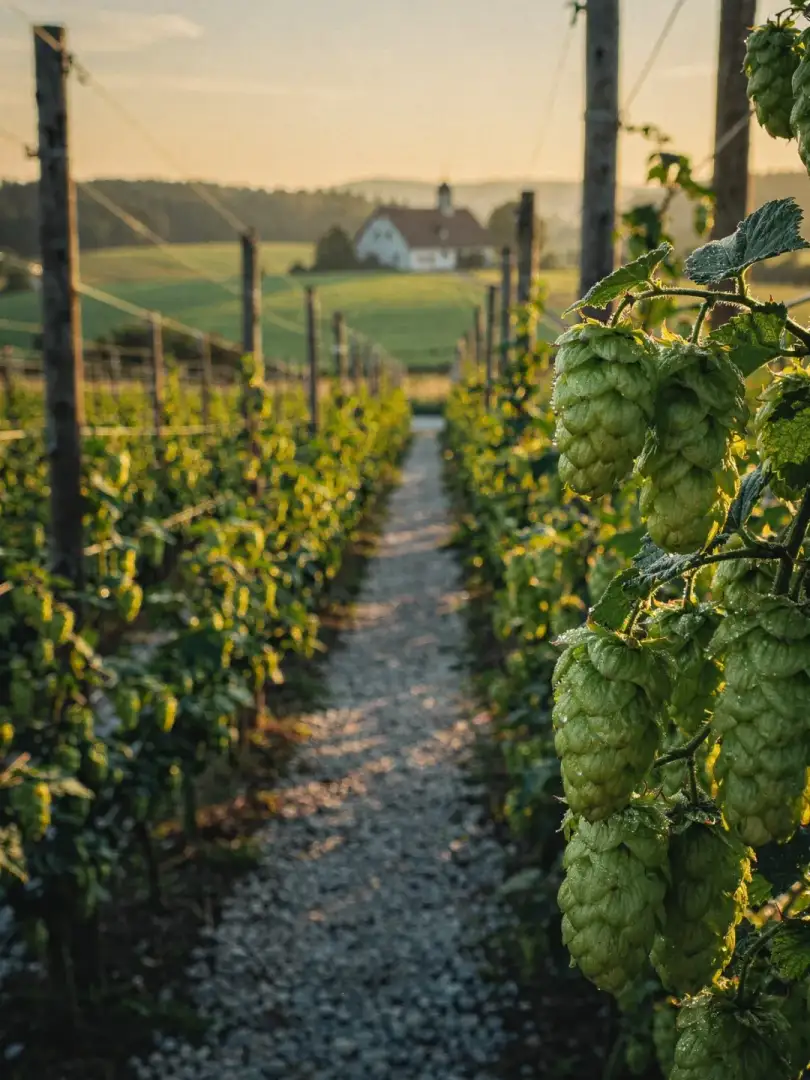
Bavaria's great hop gardens are not located in Swabia. Bavarian brewers source their cones mainly from the Hallertau hop-growing region, which with around 17,100 hectares accounts for about 83 percent of Germany's hop acreage. “Hopfen aus der Hallertau” has been registered as a protected geographical indication since 2010.
Why does hops belong in beer? It makes it bitter and keeps it fresh longer. It also contributes aroma — floral, herbal, or citrus notes. Bitterness is measured in IBU, a number for bittering compounds. The higher it is, the more assertive the impression, though perception also depends on sweetness and carbonation.
A Weißbier, by design, is restrained in this regard. According to competition guidelines, its range is only about 8 to 15 IBU. So when you drink a Rieser Hefeweizen, you first taste banana and clove from the yeast, with hops staying in the background. Still, they ensure the beer doesn't become cloyingly sweet.
In an Augsburg Helles, hops are allowed to show a bit more. There, the standard lies at around 16 to 22 IBU, enough for a clean, slightly herbal finish. Which specific varieties individual breweries use is usually not disclosed, so no names will be given here.
Bittering hops and aroma hops differ in their role. Bittering hops are added early in the kettle and boil for a long time so they release their bittering compounds. Aroma hops are added late or even cold, so the volatile fragrant compounds are preserved. The classic Swabian beers manage well with just the first approach.