Brotzeit and Kirta
Food & Beer Culture
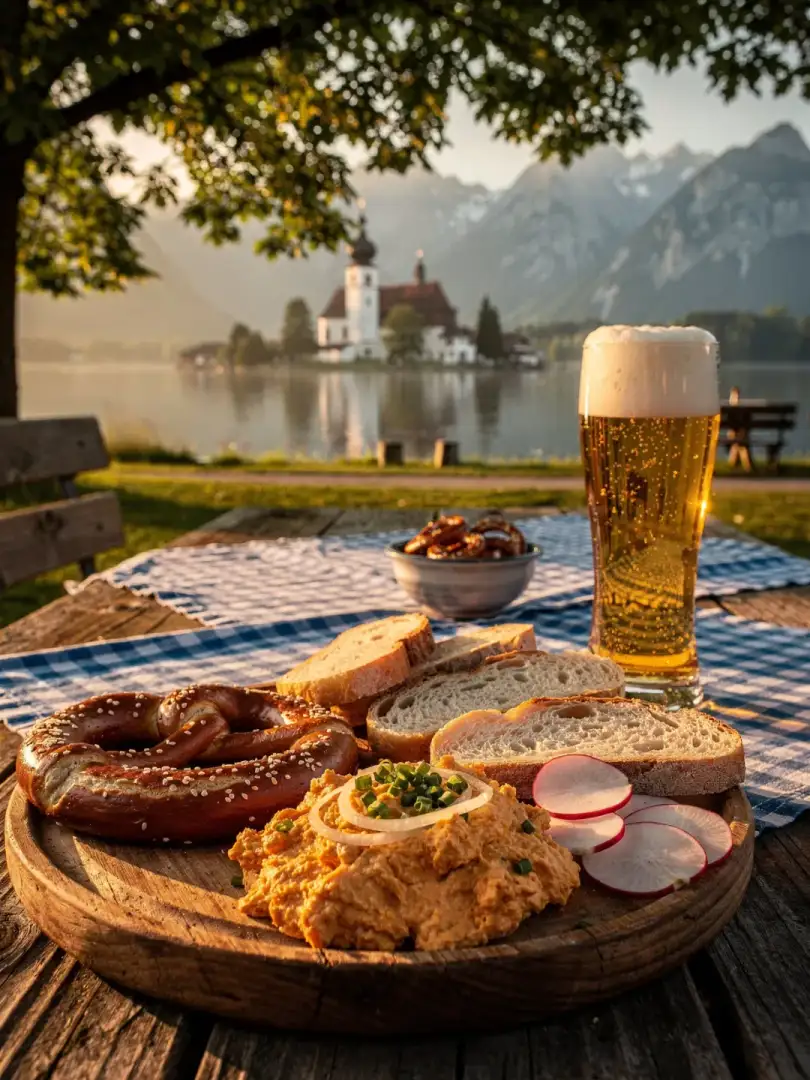
What do people eat with beer in the Oberland? A Brotzeit: Obatzda, a spread of ripe Camembert, butter, paprika and onions, served with pretzels and radish. Then there's roast pork with dumplings and, by the lake, char straight from the Tegernsee.
Helles suits all of it, being neither too bitter nor too sweet. It rinses away the fat from cheese and roast, letting bread and meat keep their own flavor. With Obatzda, both Weissbier and Helles work equally well.
In Aying, the Bräustüberl next to the brewery is part of the experience, and in summer people sit beneath chestnut trees. On the second weekend of October, the brewery celebrates the Ayinger Bräu-Kirta, a multi-day festival with a beer tent, brass bands, a crafts and farmers' market, and an open house in the brewhouse.
Bad Tölz has its Leonhardifahrt on November 6th, a pilgrimage with decorated horse-drawn carriages heading to the Leonhardi chapel. Afterward, the beer comes to the tavern table, in a Maß or a Halbe, just as innkeepers have poured it for centuries.
Head from Holzkirchen toward the mountains, and you'll find village taverns and alpine huts along the way serving Brotzeit on wooden boards. Often the dining room feels plain and the beer tastes all the better for it, as people sit together, let the sun fall on the slopes, and eat what the farmer has brought from their own land. This is precisely how the Oberland has stayed beer country. Anyone drinking alcohol should pace themselves and not drive after a Brotzeit; in the Oberland, water on the table is always part of the beer ritual too.