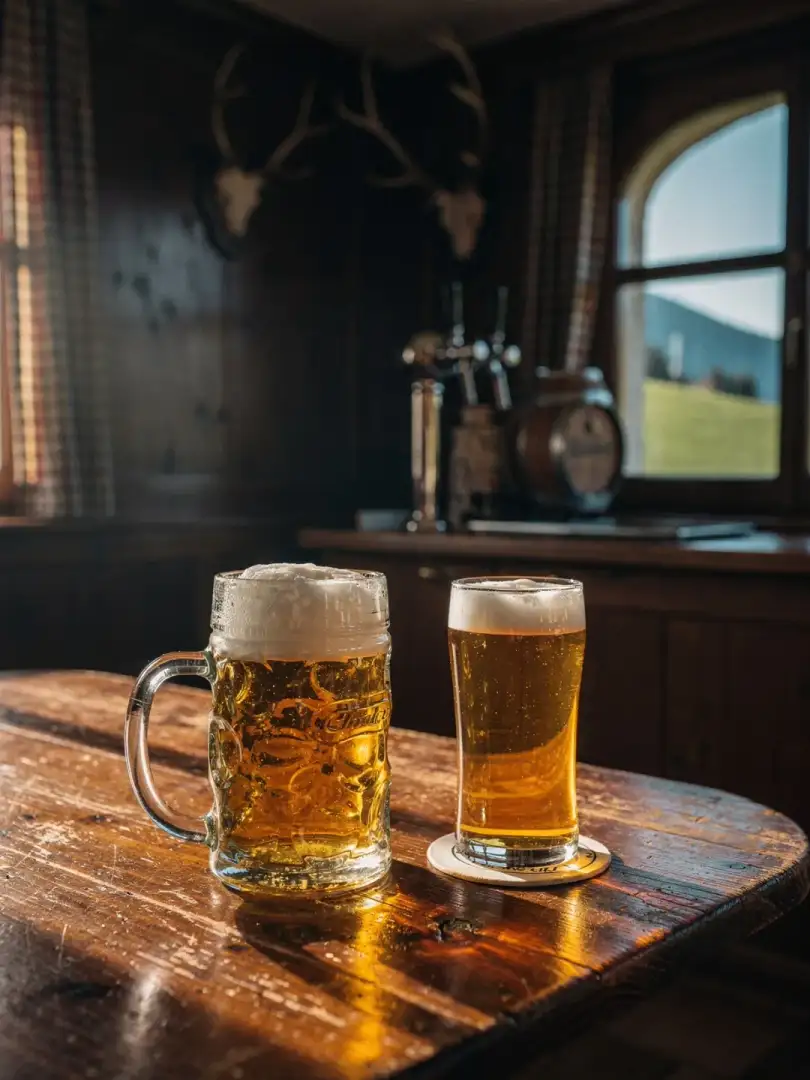
Maß, Halbe, Wirtshaus
Tasting
What does Oberland Helles taste like? Of pale bread, a touch of honey and a subtle herbal note from the hops, with a dry, short finish. It's soft on the palate and leaves room for food.
Three beers serve well as examples. Tegernseer Hell shows the classic, round side. The Ayinger Jahrhundert-Bier, at around 5.5 percent alcohol, is stronger and spicier. And the Weisse, with its clove and banana notes, offers the counterpoint for when bottom-fermented isn't quite the mood.
It's drunk from a glass mug. Beer gardens often serve the Maß, a liter mug, while taverns pour the Halbe, a half-liter. Weissbier comes in a tall, slender glass that gives the foam crown room to breathe.
Helles is best enjoyed at around six to eight degrees Celsius; Starkbier can be served warmer, letting the malt aromas open up. When pouring: tilt the glass, straighten it up halfway through and don't let the foam crown climb too high.
If you're trying it for the first time, a set order helps. First look: color, clarity, foam. Then smell, maybe bread, hay or banana. Then take a small sip and pay attention to the bitterness at the back of the tongue. Starkbier is best sipped slowly, with pauses, since its alcohol acts fast. And one more rule of thumb: the colder a beer is served, the less you taste it, so a good Helles can happily warm up a few minutes in the glass.