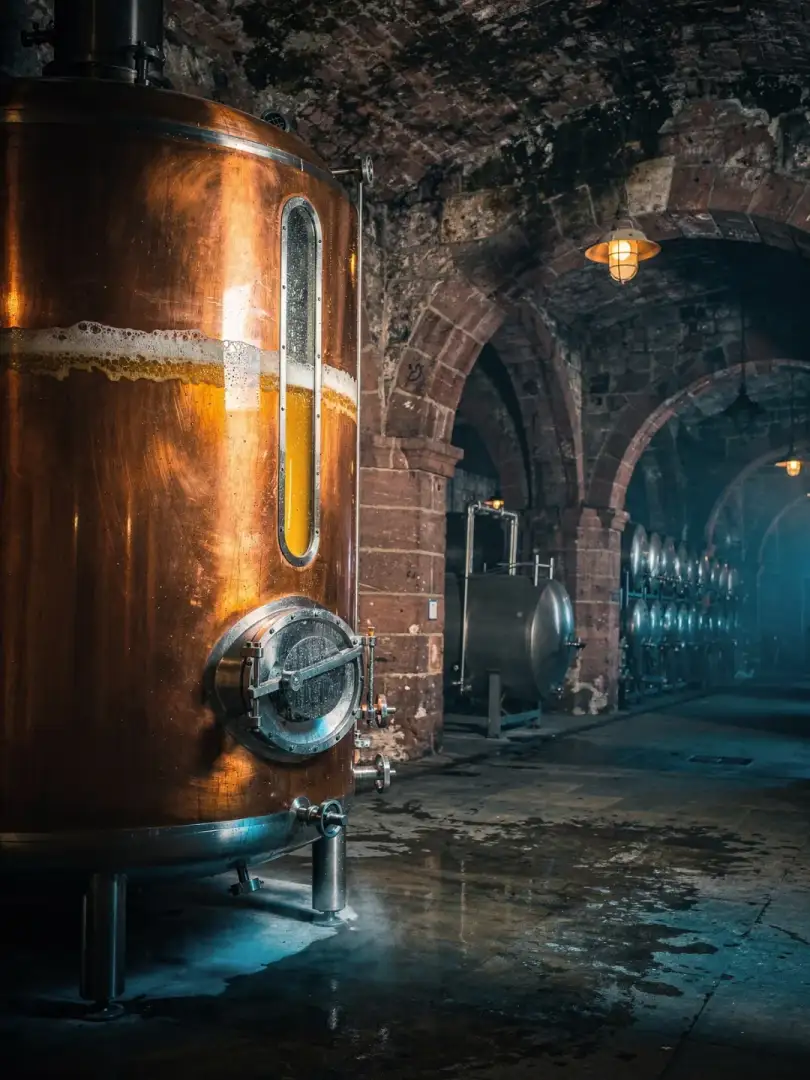
Cold Fermentation, Lagering
Yeast & Fermentation
Pils and Helles are bottom-fermented beers. Their yeast works cool, usually between 8 and 12 degrees Celsius, and settles to the bottom of the tank at the end of fermentation. Hefeweizen, by contrast, ferments with top-fermenting yeast at notably warmer temperatures, with the yeast rising upward. This distinction between bottom- and top-fermentation shapes the whole region, since both types are brewed side by side in Karlsruhe, Heidelberg, and Plankstadt.
For a long time, no one knew what yeast actually was. Only in the 19th century did Louis Pasteur establish that it consists of living cells. In 1883, the Dane Emil Christian Hansen succeeded at the Carlsberg laboratory in isolating the first pure culture of a bottom-fermenting yeast. Since then, every brewery, from Hoepfner to Welde Braumanufaktur, has been able to work with a clean, known strain.
Primary fermentation is followed by lagering. The word "lager" comes directly from this: the young beer rests for several weeks at near-freezing temperatures, settles out haze, and rounds out its flavor. This is where it differs from Hefeweizen, which goes into the bottle after a shorter maturation and continues fermenting there with its yeast.
With refrigeration technology, lagering is no longer tied to winter or to rock-cut cellars. At Heidelberger Brauerei and at Welde, the beer now rests in chilled tanks. Exactly which yeast strains the breweries use, they don't reveal. What's known is simply that yeast produces alcohol. It also contributes aromas, in wheat beer the notes of banana and clove.