Barley & Wheat
Malt & Grain
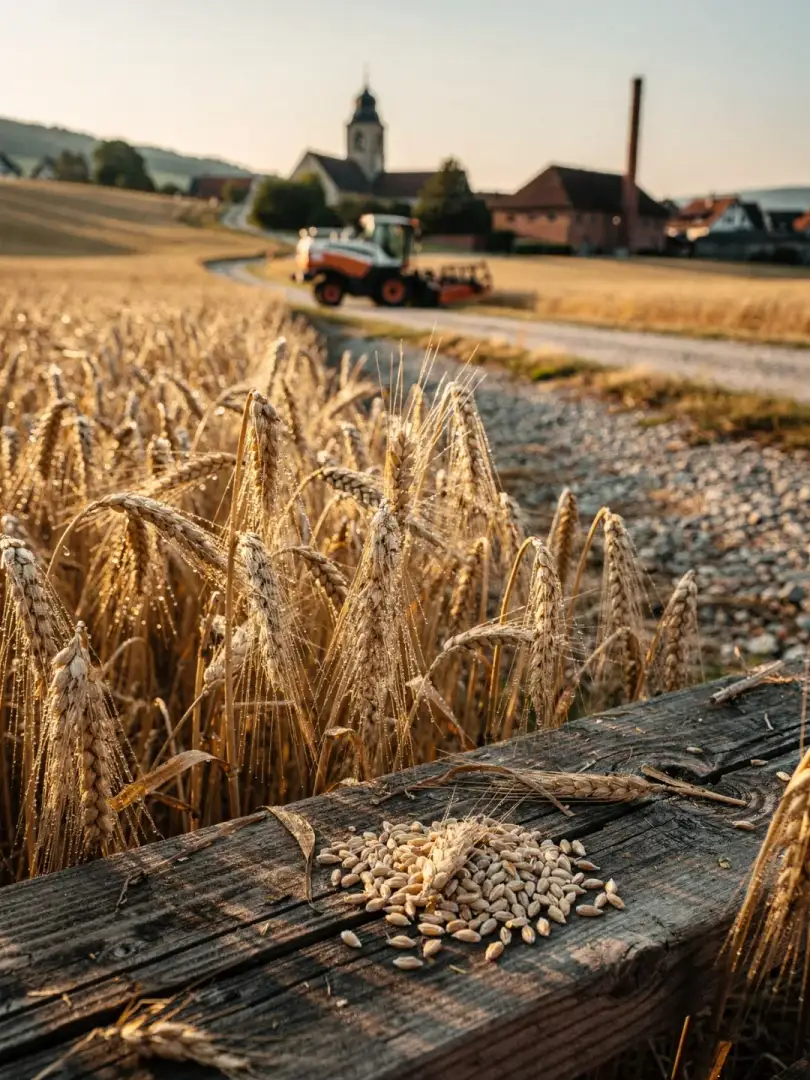
What grain goes into Badisches Bier? For Pils, it's barley; for Hefeweizen, mostly wheat. The fertile loess soils of the Kraichgau between Heidelberg and Karlsruhe are considered excellent farmland for grain. Which maltings supply any given brewery is rarely disclosed, so that detail remains open here.
Barley only becomes malt through malting. The grain swells in water, germinates for a few days, and this germination converts starch in a way the yeast can later ferment. The green malt is then dried in a kiln. How hot and how long determines the color. A pale Pilsner malt is dried gently and stays light.
How pale a beer turns out is measured in EBC, a color scale. A German Pils sits at 4 to 8 EBC, a Helles at 6 to 10, a Märzen considerably higher. Pilsner malt tastes of bread and grain, without roasted notes. That's why it's considered the ideal base for beers meant to let the hops take center stage.
Wheat malt is added for Hefeweizen, typically making up at least half the grist as an industry norm, even if that's nowhere codified as law. Wheat malt gives the beer a soft body and generous foam. It contains more protein than barley malt, and it's precisely this protein that holds together the dense head of foam so prized in Hefeweizen. Brewing then takes place at the city breweries of Mannheim, Karlsruhe, or Plankstadt, using malt previously kilned at the maltings.