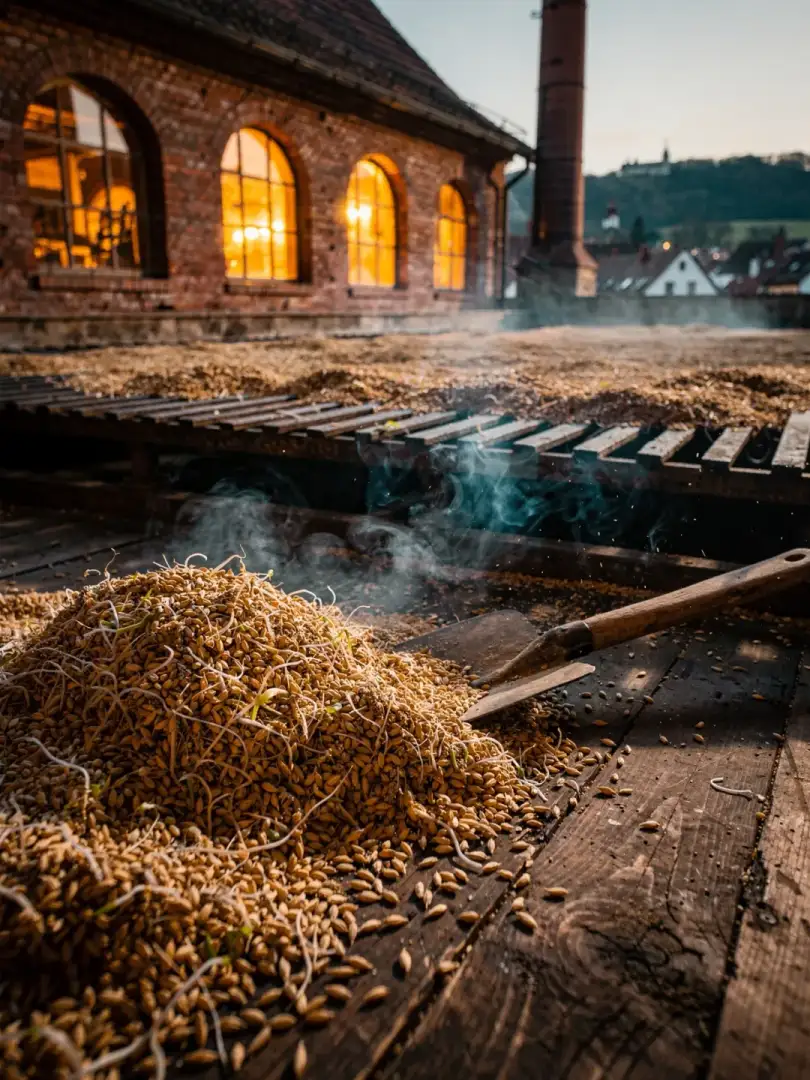
Beechwood Fire, Kilning
Malt & Grain
What is smoked malt, and where does the smoke in Rauchbier come from? Barley is germinated and then dried. This drying is called kilning, and it happens on the kiln, a heated floor with ventilation. With smoked malt, an open fire — usually beechwood — burns beneath the kiln, and its smoke passes through the moist grain.
The grain absorbs the smoky compounds that later show up in the beer's flavor: ham, campfire, sometimes bacon. The longer the smoke acts, the stronger the aroma. Because breweries smoke their malt to different degrees, the city's Rauchbiers taste quite different from one another.
Some of the malt comes from the city itself. Behind Weyermann Malz stands a factory founded in 1879 by Bamberg grain merchant and boatman Johann Baptist Weyermann, initially with a hand-operated roasting drum under a tarp. The current factory site on Brennerstraße and Memmelsdorfer Straße went into operation in 1888.
According to the company, more than 85 malt varieties now leave the factory and ship to more than 135 countries. Well-known varieties include Carapils, Carafa, and Caramünch. Carafa is a very dark, roasted malt that adds color without bringing much bitterness. It's used for the dark beers of entirely different regions.
Oak can also provide the smoke. Schlenkerla produces an Eichenrauchbier (oak smoke beer), for which the malt is kilned over oakwood. According to the brewery, it tastes different from the beechwood version — rounder and less sharp.