Barely Any Bitterness
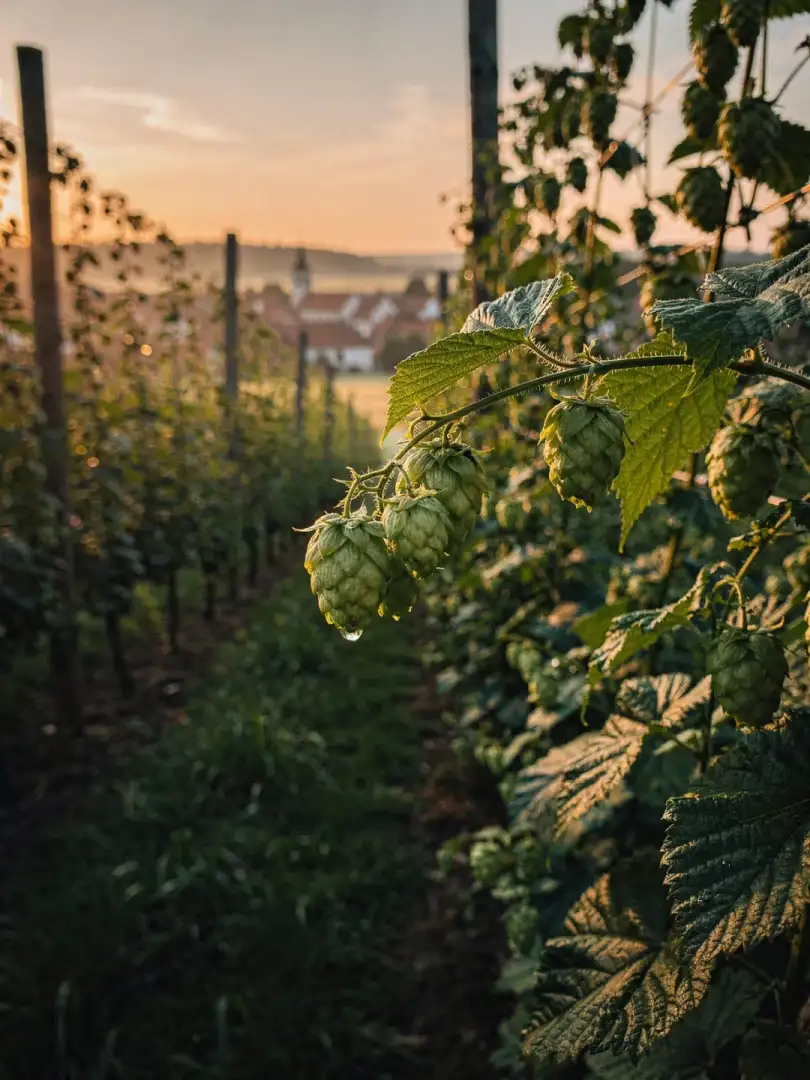
Hops
No hops are grown commercially in Berlin itself; brewers source them elsewhere. But for Berliner Weisse, quantity matters more than origin, since it needs almost none. According to BJCP, its bitterness sits at just 3 to 8 IBU, a measure of bitter compounds in beer. For comparison, a German Pils reaches 22 to 40.
The reason lies in microbiology. Hops inhibit many lactic acid bacteria—exactly the bacteria brewers want active in this beer. The less hops, the more freely the bacteria can work. This fits with how the acidity takes over the role bitterness usually plays: it keeps the beer fresh and gives it a dry finish.
With Berliner Pils, it's the opposite story. It thrives on hops, on a bitter finish and a fine herbal note that makes the beer highly drinkable. Both beers come from the same city but taste like they belong to different worlds. Hops make all the difference.
Where the hops for such beers come from varies by brewery. Protected growing regions include the Elbe-Saale region (PGI, 2014) and the Hallertau (PGI, 2010). Where any individual brewery sources its hops isn't listed in these registers and isn't claimed here. Even small breweries like Vagabund or Schneeeule, which emerged in recent years in Wedding and elsewhere, tend to favor acidity and fruit over hop bitterness in their Weisse.