Yeast Plus Lactic Acid
Yeast & Fermentation
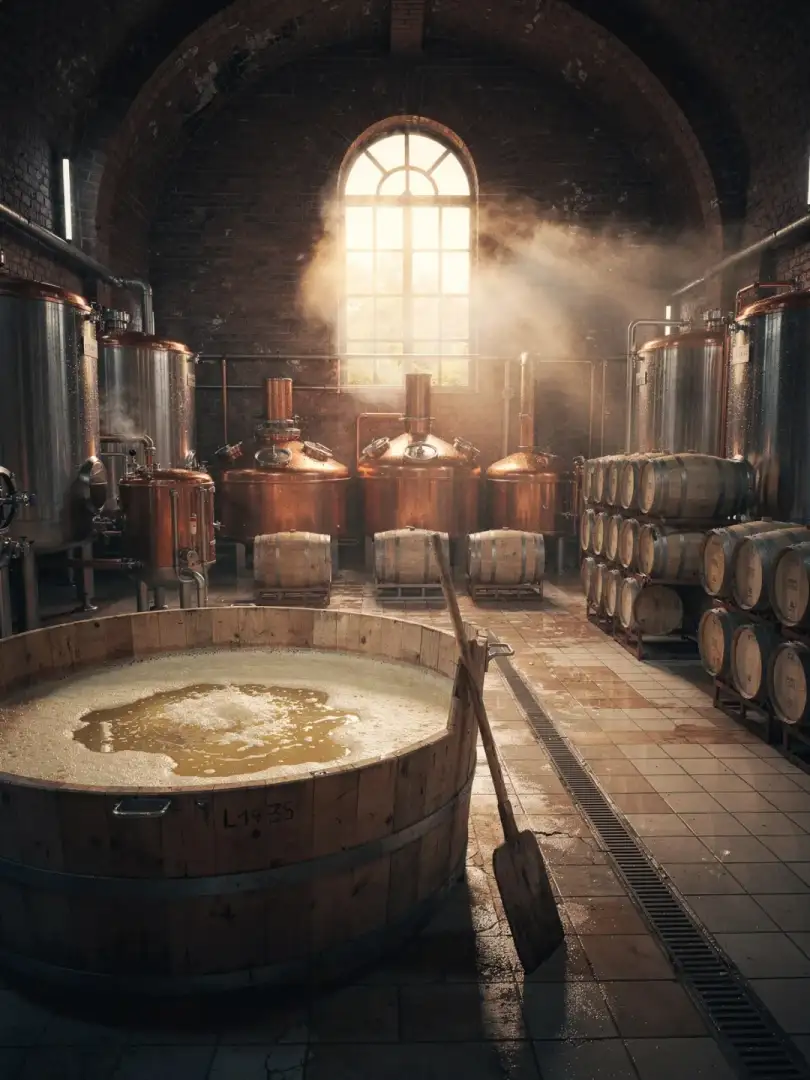
How does Berliner Weisse become sour? Two microorganisms ferment it together: a top-fermenting yeast that converts sugar into alcohol, and lactic acid bacteria that turn it into lactic acid. The species Lactobacillus brevis is usually named. Top-fermenting means the yeast works at the top of the vessel and ferments at room temperature.
Temperature controls the level of sourness. According to historical accounts, it ranged from 12 to 18 degrees Celsius, and higher temperatures favored the lactic acid bacteria, making the beer more sour. In the 19th century, the wort was sometimes not even boiled, so that microbes from the malt could enter the beer. How sour the beer turned out could only be roughly controlled this way.
Small breweries are reviving this tradition. Schneeeule in Wedding was founded in 2016 and is considered the first brewery in Berlin in over 30 years to focus on traditional Weisse. Their Marlene, at 3.0 percent, follows old recipes according to the brewery, in which the wild yeast Brettanomyces also plays a role.
Large breweries work under controlled conditions: they deliberately inoculate a beer with lactic acid bacteria and monitor fermentation closely. Berliner Pils, by contrast, ferments the conventional way—bottom-fermented and cold, using lager yeast. Anyone who understands both fermentation methods will see why Weisse is its own distinct style, not just a Pils with lemon juice added. The shot of syrup doesn't require a second fermentation either: the syrup goes into the glass only once the beer is already finished.