Weisse & Pils
Beer Styles
What is Berliner Weisse? A pale, hazy, sour wheat beer with very low alcohol content. How much alcohol does it have? According to BJCP, 2.8 to 3.8 percent ABV is within range, and today's Weissen typically hover around 3 percent. It tastes of lemon, yogurt and fresh bread, with almost no bitterness at all.
How does it differ from Bavarian Weissbier? Hefeweizen is noticeably stronger, at 4.3 to 5.6 percent, and its yeast delivers banana and clove notes but no acidity. What sets it apart from Gose is that the latter contains salt and coriander. Both wheat beers are top-fermented, but only in Weisse does the lactic acid come from the fermentation itself.
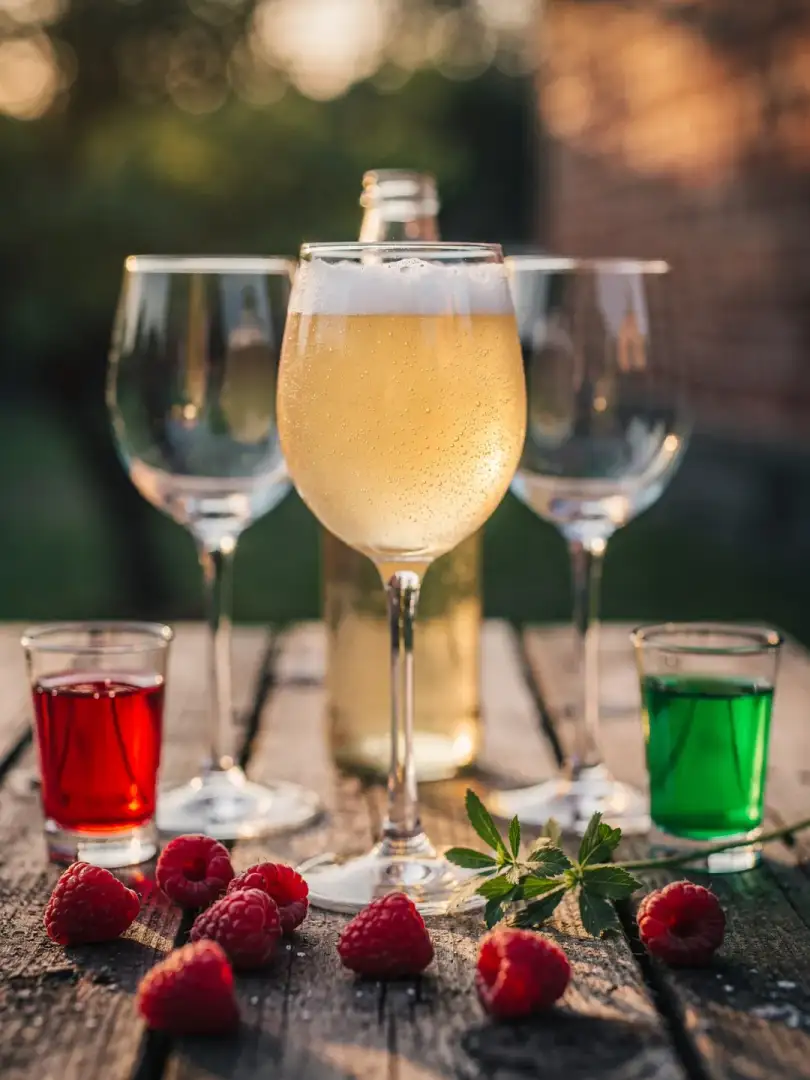
The shot of syrup is part of Berlin tradition. Around 1900, brewers began softening the Weisse, which was increasingly perceived as too sour, with fruit syrup; this practice has been widespread since the 1920s. A Weisse mit Schuss consists of 0.33 liters of beer and about 2 centiliters of syrup. Raspberry is called "red," woodruff is called "green," and the latter is often a flavoring rather than the actual plant.
The nickname "Champagne of the North" dates back to the late 19th century. The city's second signature beer is Pils: a bottom-fermented, bitter beer that Berliner Kindl and Schultheiß shaped as Berliner Pilsner. The brand name remains "Berliner Kindl Weisse." If you order "eine Weisse" in Berlin, you'll almost always get it served with syrup unless you specify otherwise—not a rule, just custom.
Berliner Weissemixed fermentation
- Original gravity
- 7.1–8 °P
- Alcohol
- 2.8–3.8 % vol
- Bitterness
- 3–8 IBU
- Colour
- 4–6 EBC
Pale, hazy, spritzy, distinctly sour, barely any bitterness.