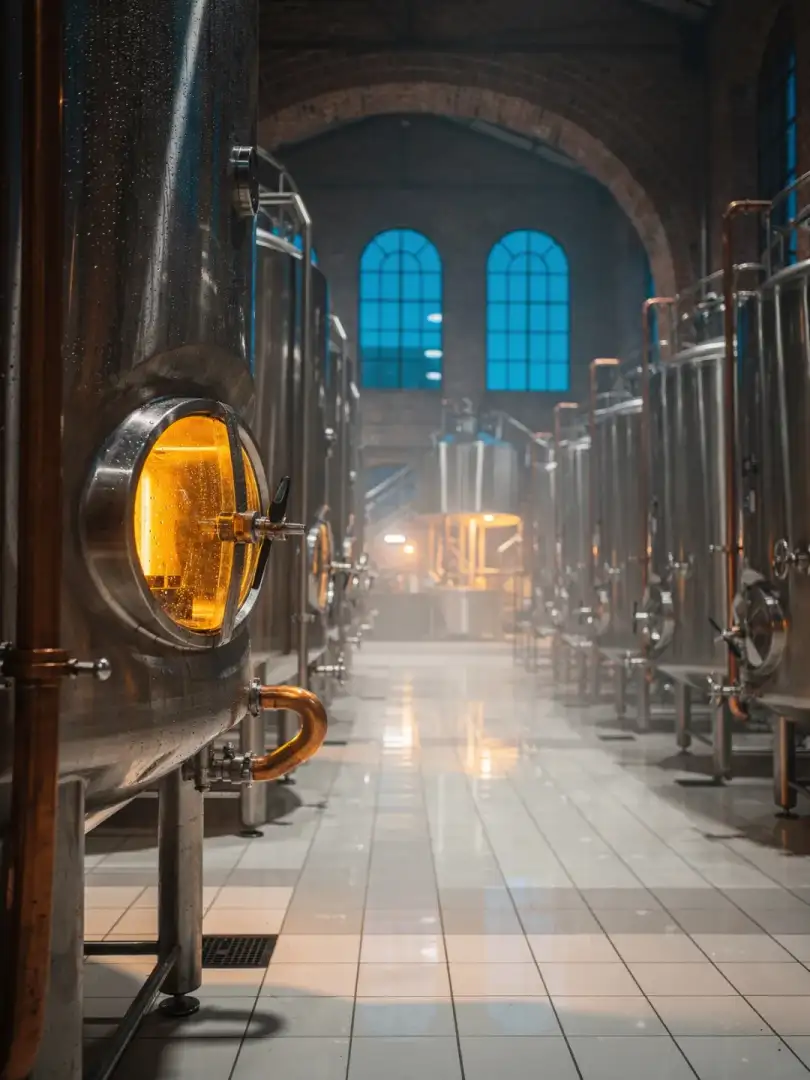
Cold Conditioning
Yeast & Fermentation
Pilsner is bottom-fermented, and this fermentation method is what gives Bremen's beer its clean character. Bottom-fermenting yeast works at low temperatures, usually in the single digits to low double digits Celsius, and settles to the bottom at the end of fermentation. Top-fermented beers like Kölsch or Altbier, by contrast, ferment warm and form a yeast layer on top.
According to the Beck's brewery, its yeast comes from its own strain, cultivated by brewmasters across generations. A brewery guards its yeast strain like a treasured recipe, since it shapes fruitiness, dryness, and finish. As with a sourdough starter, it's passed on from one batch to the next.
Primary fermentation is followed by lagering. The young beer rests in sealed tanks at temperatures near zero degrees Celsius for several weeks, during which the yeast breaks down byproducts, particles settle, and carbonation binds into the beer. This is exactly where the term "lager" comes from.
In the past, this step had to happen in winter or in an ice cellar. Today, refrigeration units handle the cooling, allowing breweries to brew bottom-fermented beer in any season. The fact that a harbor beer stays equally clear in summer and winter is thanks to this cooling technology, not the weather.
Large breweries like Beck's rely on sealed stainless steel tanks for this, while smaller houses like the Union-Brauerei brew smaller batches at their brewpub. The principle remains the same: yeast converts the sugar in the wort into alcohol and carbon dioxide, and the young beer is then cold-conditioned for weeks until it turns smooth and clear.