Weser Pilsner
Beer Styles
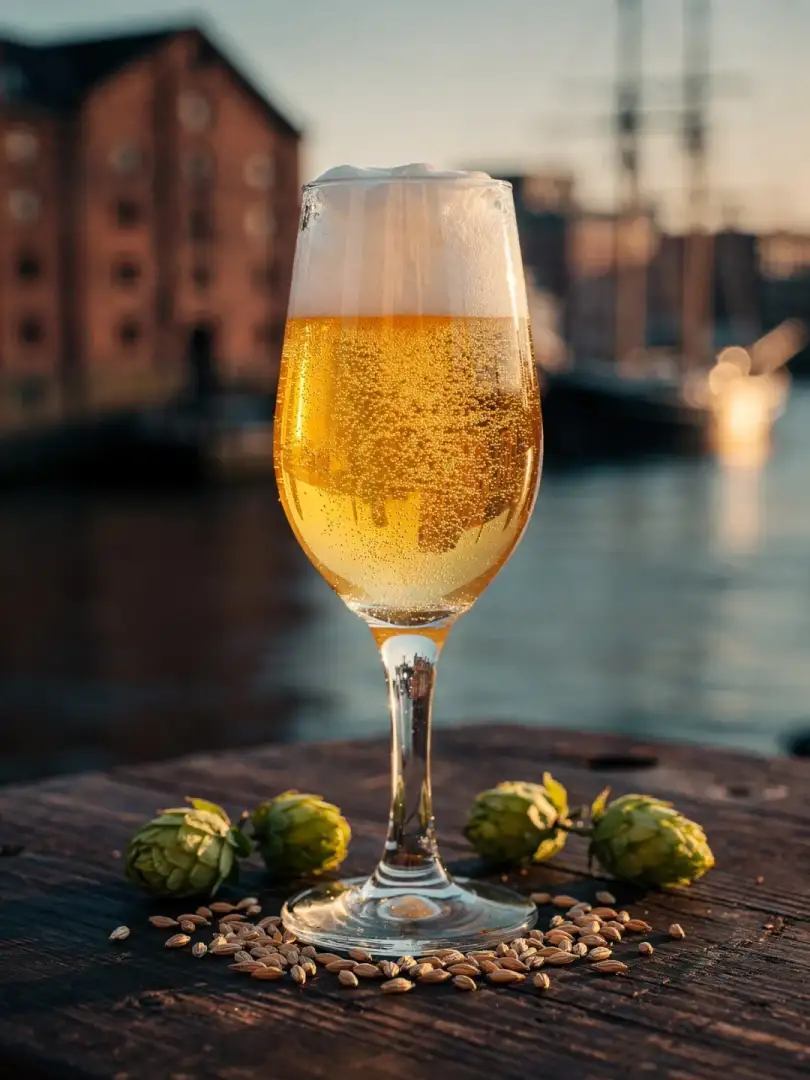
The flagship beer of the Hanseatic city is pilsner. So what does a Bremen pilsner taste like? Straw-yellow with a white head, dry, with a clean, refined bitterness and an aroma of fresh bread and meadow grass. It's neither sweet nor heavy, but built for a crisp, brisk sip that whets the appetite.
Where does the style come from? On 5 October 1842, the Bavarian brewer Josef Groll brewed the first pale bottom-fermented beer of this kind in Pilsen. What was new wasn't the fermentation method, but the pale color. In Germany, "Pilsner" (or "Pils") became a generic term that any brewery is free to use for its beer.
How much alcohol does pilsner contain? By style guidelines, German pilsners range between 4.4 and 5.2 percent ABV, with an original gravity of 11 to 12.4 degrees Plato. That's somewhat lighter and drier than an export beer, which carries more malt body and once traveled long distances from the port city.
The difference from its neighboring style becomes clear when you set the two side by side. A Helles is softer and maltier, while a pilsner is drier and hoppier, and Dortmunder Export tastes stronger and rounder than both. Bremer Bier was conceived as an export beer, but today it caters to what pilsner drinkers in northern Germany look for: freshness and a clean bitterness.
Unfiltered, naturally cloudy beers, by contrast, show more yeast and bread character, and they're identified by the label "naturtrüb" (naturally hazy). Setting a clear pilsner next to a hazy one reveals just how much filtration changes the taste. Each brewery decides this for itself, variety by variety.
Pilsnerbottom-fermented
- Original gravity
- 11–12.4 °P
- Alcohol
- 4.4–5.2 % vol
- Bitterness
- 22–40 IBU
- Colour
- 4–8 EBC
Straw-yellow, white head, dry, clean refined bitterness.