Pale Barley Malt
Malt & Grain
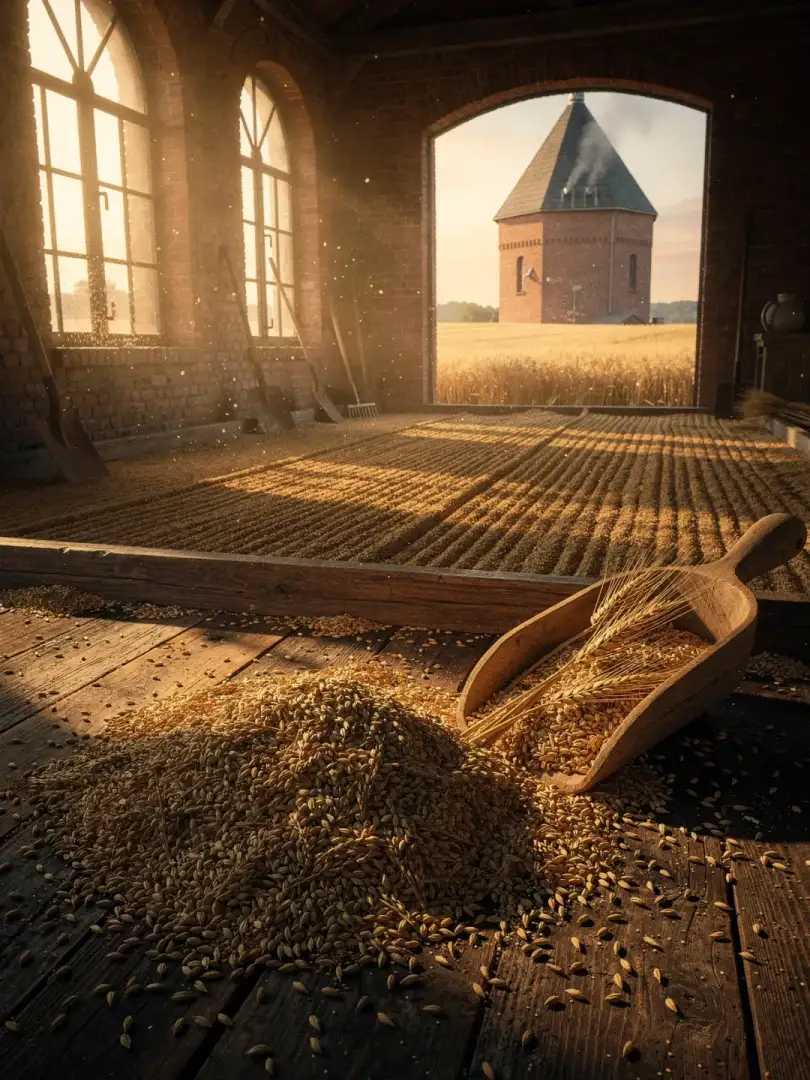
A Bremen pilsner begins with barley, which is sprouted at the malthouse. There, the grain is soaked in water, allowed to germinate for a few days, and growth is halted once the starch inside the kernel has broken down. This produces malt, the sugar source of the beer.
Next comes the kiln, a drying oven. For pale beer, the malt is kilned gently at low heat so it stays light in color and tastes of bread, biscuit, and fresh grain. Dark roasted notes are deliberately avoided, since pilsner is meant to pour a straw-yellow color into the glass. Under German rules for bottom-fermented beers, only barley malt may go into the mash.
This applies to Bremen's brands as well. According to the Beck's brewery, brewing follows the Reinheitsgebot (Purity Law), using only water, malt, hops, and yeast. Pale pilsner malt forms the base; for other varieties, a few specialty malts are added for color or sweetness.
The malt body determines how round a pilsner feels on the palate. The higher the original gravity — the portion dissolved from the malt into the wort before fermentation — the fuller-bodied the beer. By style guidelines, a pilsner falls between 11 and 12.4 degrees Plato, and this figure gives Bremen's pilsner its medium body.
Beck's and Haake-Beck live and breathe this pale malt. To taste the difference, compare a pilsner with a beer brewed from caramel malt: one comes across dry and crisp, the other sweetish and round. Bremen's pilsner from Neustadt represents the former.