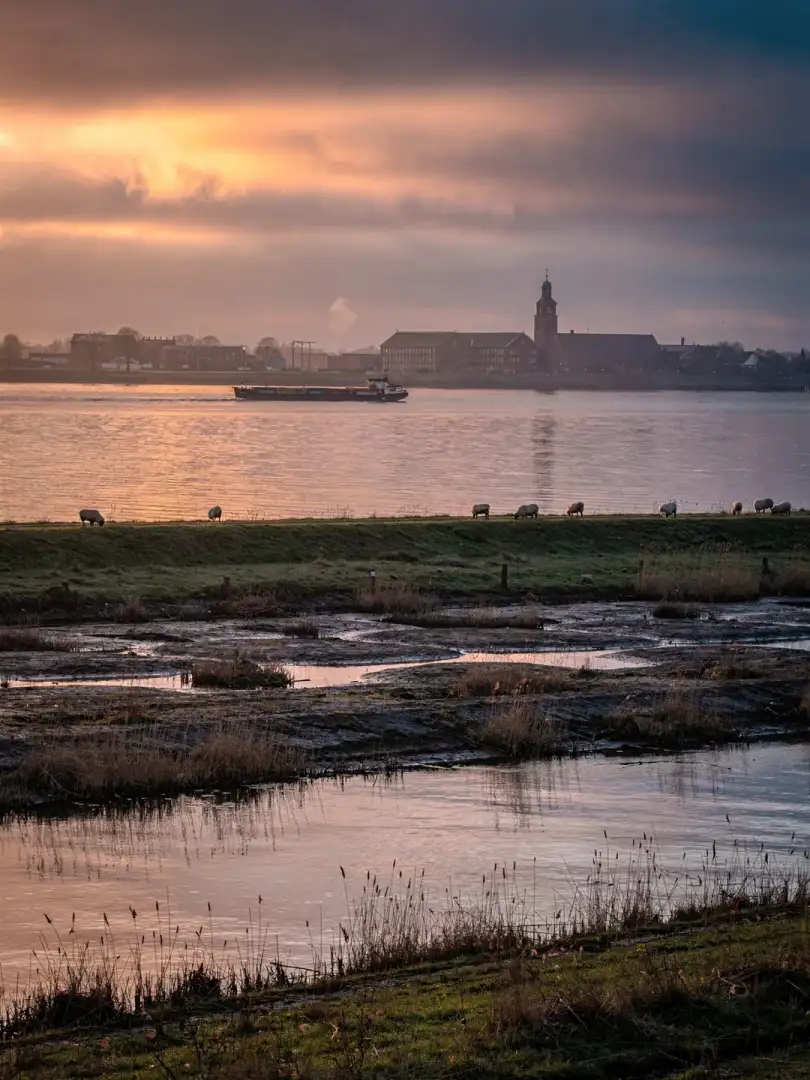
The Weser, Flat Land
Water & Soil
Bremen lies flat along the Weser, just a few meters above sea level. Up to the Weser weir in Hemelingen, the river rises and falls with the tides, and the ships that once carried beer overseas sailed almost right up to the breweries' doors. The water that goes into the beer, however, doesn't come from the river itself.
How hard Bremen's brewing water is cannot really be pinned down as a defining trait of Bremer Bier. No reliable figures exist here, and large breweries treat their water anyway: they soften it, remove salts, or add minerals as needed. The old saying "the water makes the style" belongs more to history than to the present day.
What pilsner needs from its water is well known. Soft, mineral-poor water lets the hop bitterness come through clean and refined, as in the original style from Pilsen. Hard, carbonate-rich water, on the other hand, makes the bitterness coarser and suits darker beers better. Anyone wanting to brew a pale export beer had to adjust their water accordingly.
Then there's the terrain. Where marsh and sand lie flat beneath an open sky, there's no mountain to carve a rock cellar into, as brewers in Franconia or Bavaria can do. In Bremen, cooling is done mechanically, in tanks and insulated cellars. The beer matures independent of the landscape, governed only by the rhythm of the plant.
The fact that Beck's and Haake-Beck became known far beyond the city also has to do with the waterway. The Weser carried the casks to the harbor and onward to the North Sea, and the beer had to stay stable on that journey. This explains why Bremen's brewers placed such value on clear, long-lasting beers rather than bold, heavy flavors.