Two Paths of Fermentation
Yeast & Fermentation
In the Chiemgau, two families of beer ferment side by side. Weissbier is top-fermented: the yeast rises to the top during fermentation and works at room temperature, usually around 20°C (68°F). Helles and Bock are bottom-fermented, with the yeast settling down and fermenting cool, at about 8 to 12°C (46–54°F).
Warm fermentation is what gives Weissbier its aroma. Top-fermenting wheat beer yeast produces compounds during fermentation that smell of banana and clove. A Helles from cold fermentation, by contrast, tastes clean and neutral, letting the malt take the lead.
Bottom-fermenting yeast is considered a hybrid of two species, a brewer's yeast and a wild cold-tolerant yeast. Its scientific name is Saccharomyces pastorianus. How long the beer is lagered is up to the brewer: Helles usually matures for a few weeks in the cellar, Bock for longer.
According to the brewery, Hofbräuhaus Traunstein was, in 1982, the first brewery to serve Weissbier on draft. Before that, Weissbier was mainly available bottled. The difference lies in the secondary fermentation: bottle-conditioned Weissbier continues to mature in the bottle with a little yeast and sugar, while draft beer is filled differently.
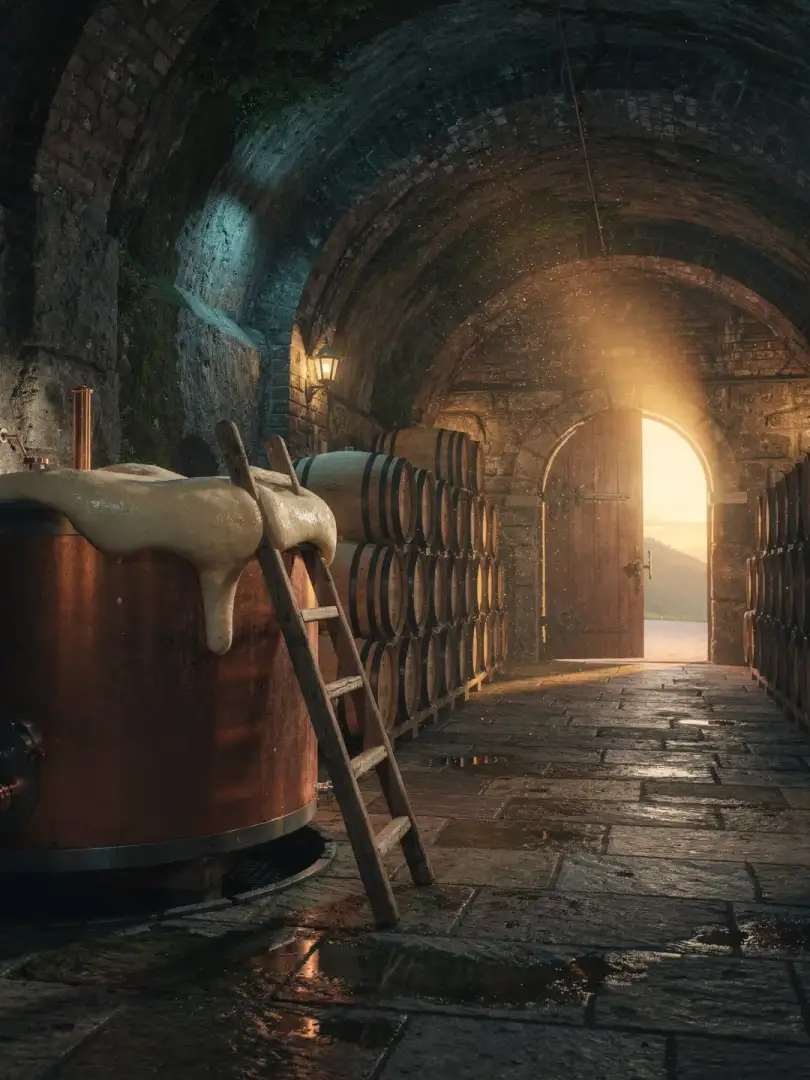
Alongside tanks, the Chiemgau's mountain and hillside cellars are still used for aging. Chiemseebräu and Wieninger Teisendorf also make use of their hillside locations. There it stays evenly cool without needing electricity, and the beer continues to mature quietly. Brewers who age their beer for extended periods like to do so in the cellar, where it stays calm and cold.