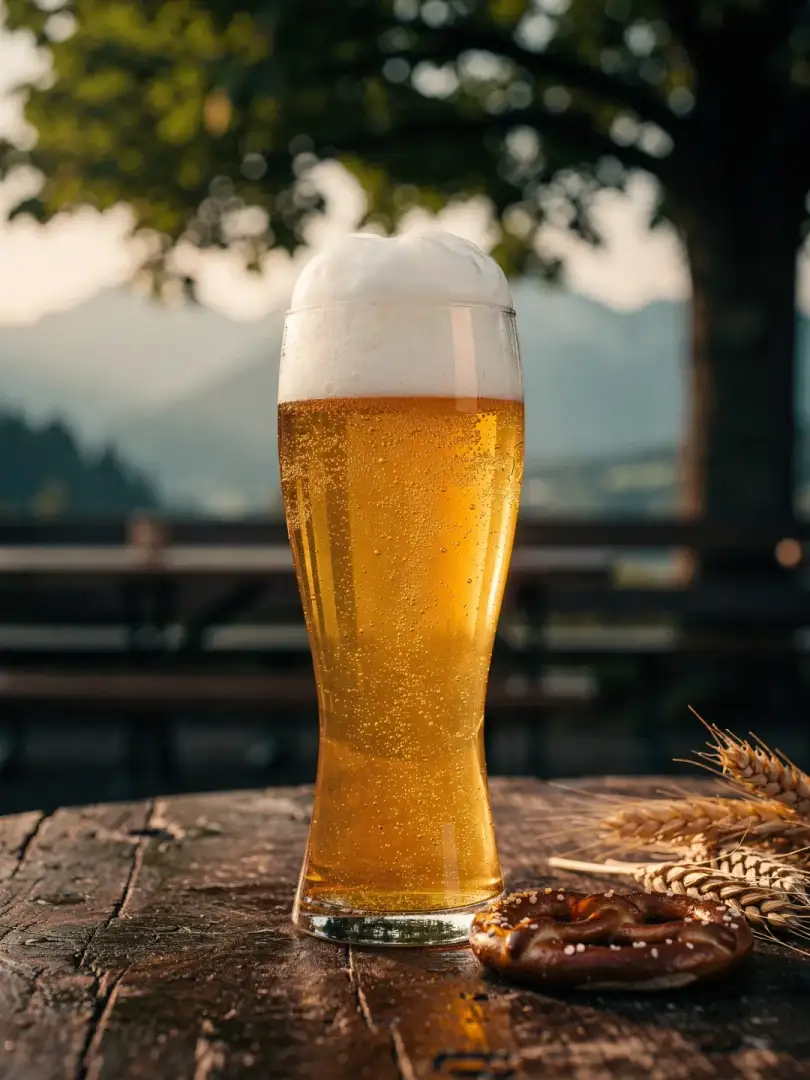
Weissbier, Helles, Bock
Beer Styles
What is Weissbier, and why is it called that? Weissbier is a top-fermented beer with a high proportion of wheat malt, named not for its color but for the wheat. It's cloudy from yeast, carries a tall head, and tastes of banana, clove, and fresh bread. Ducal Weissbier brewing in Traunstein dates back to 1612.
How does Weissbier differ from Helles? Helles is bottom-fermented, golden, mildly hopped, and clear, without fruity notes. Weissbier is top-fermented, cloudy, and fruity. Helles is an everyday drinking beer, while Weissbier is both fuller and more quaffable at once.
The dark strong beer, often sold in the region as Bock, stands in contrast to the everyday Helles: a Dunkler Bock starts at 15.7 degrees Plato according to BJCP guidelines, while German beers labeled Bockbier must, under the Beer Ordinance, reach at least 16 percent original gravity. That's the sugar content of the wort before fermentation, which determines how much alcohol results.
How much alcohol does Weissbier have? By style guidelines, pale Weissbiers range from 4.3 to 5.6 percent ABV. Dunkles Weizen and Kristallweizen are variations: the Dunkles is brewed with more roasted malt, while Kristallweizen is a filtered, clear Weissbier. Hefeweizen and Weizenbier mean the same thing as Weissbier — in Bavaria, people usually just say Weissbier. The difference is purely one of usage.
When is strong beer served? Bockbiers are typically served during Lent and in spring, as part of a dedicated Starkbierzeit (strong beer season) with its own tappings. Chiemseebräu specifically lists dark Bockbier as a Starkbier specialty.
Pale Weissbiertop-fermented
- Original gravity
- 11–13.1 °P
- Alcohol
- 4.3–5.6 % vol
- Bitterness
- 8–15 IBU
- Colour
- 4–12 EBC
Cloudy, tall head, banana and clove, soft fullness.