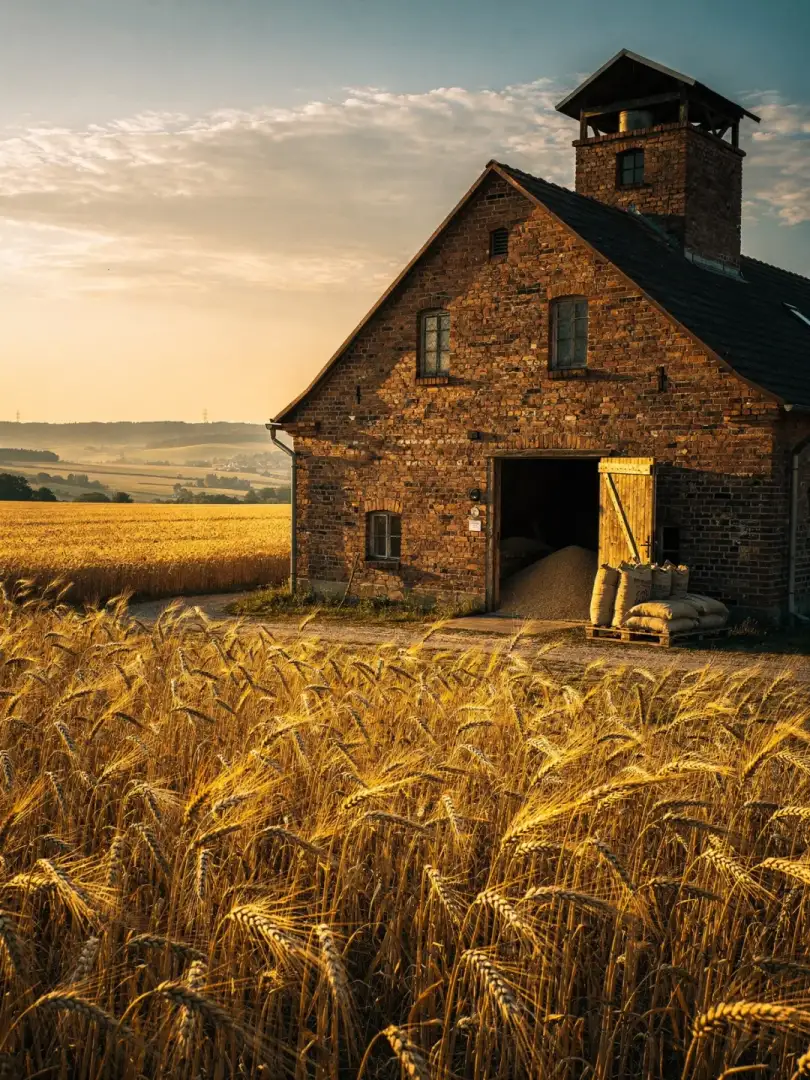
Pale Pilsner Malt
Malt & Grain
Pilsner needs pale malt, known in Dresden as in Pilsen as Pilsner malt. Malt is germinated barley that is dried in a kiln. For pale malt, it is dried at such a low heat that the grains take on almost no color.
According to the brewery, Radeberger Pilsner dates back to a time when malt and hops came from Bohemia. The founders wanted to recreate the beer from Pilsen, and that meant using raw materials from the home of their model. Where the individual breweries source their malt and barley today varies by company, and we won't commit to a specific claim.
What belongs in the glass, however, is certain. Under German law, a bottom-fermented beer consists of barley malt, hops, yeast and water. Wheat or rye, as found in beers from western Germany, have no place in Saxon Pilsner.
What the malt does in the glass is easy to explain: it supplies the sugar for fermentation and thus the alcohol. It also gives the beer body, a light bready flavor, and color. In Pilsner, that color stays a clear golden yellow, since no dark malt is involved.
Anyone ordering a pale, bitter Pilsner in Freiberg or a Dresden brewhouse is, above all, drinking barley and hops, finely balanced. The rest is patience in the fermentation cellar.
This picture also includes a contrast with dark beers. A Munich Dunkel, for instance, relies on heavily kilned malt and tastes of bread and caramel, while a Pilsner forgoes that and leaves the stage to the hops.