Barley, Loess, Dark Malt
Malt & Grain
What malt is bock beer brewed from? The style rests on barley malt, and plenty of it. Because a bock must have at least 16 percent original gravity, the brewer needs noticeably more malt than for a Pilsner at around 11 to 12 percent. This extra malt is exactly why bock tastes stronger, fuller, and sweeter.
Malt is made by letting barley germinate so it can convert its starch into fermentable sugar. A kiln then halts germination: hot airflow dries the grains. The higher and longer they're heated, the darker and more aromatic the malt becomes, ranging from bread crust to caramel.
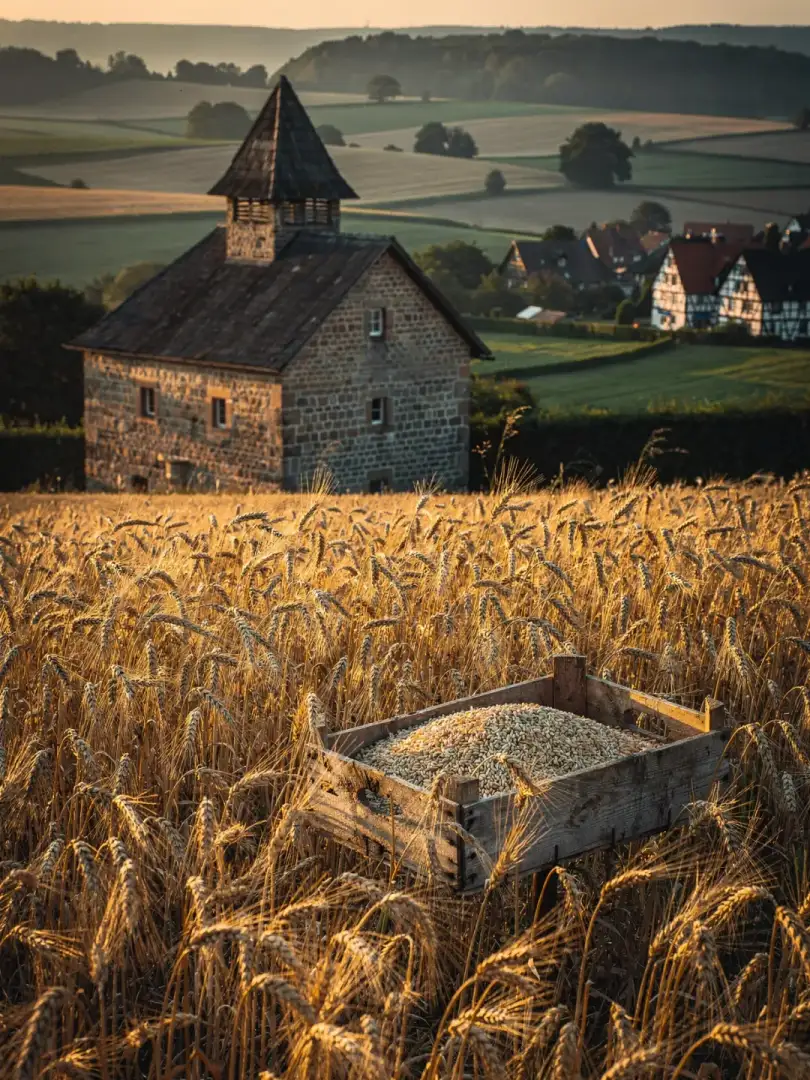
Southern Lower Saxony is farmland. Along the Leine valley and around Einbeck lie fertile loess soils where grain still grows well today. Exactly where Einbecker Brauhaus sources its malt isn't documented here, and we won't invent anything on that score.
According to widespread tradition, the old Hanseatic Einbeck brew was a mixed beer of barley and wheat, fermented warm using top-fermenting yeast. Take that as tradition, not recipe. What is established, however, is what a modern dark bock should deliver: under competition judging standards, its color falls roughly between 28 and 43 EBC, the brewer's unit for beer color. That spans from deep amber to dark reddish-brown.
In a pale bock the malt stays lighter, with color around 12 to 18 EBC, and the flavor leans toward bread crust and a light honey sweetness. Dark malts bring aromas of toast, nuts, and baked bread, with a hint of dried fruit behind them.