Gentle Bitterness
Hops
How bitter is Weißbier? Not very. Bitterness is measured in IBU, a scale for the bittering compounds in beer, and for pale Weißbier it ranges from 8 to 15 according to the BJCP guidelines. A German Pils reaches 22 to 40, so it tastes noticeably sharper.
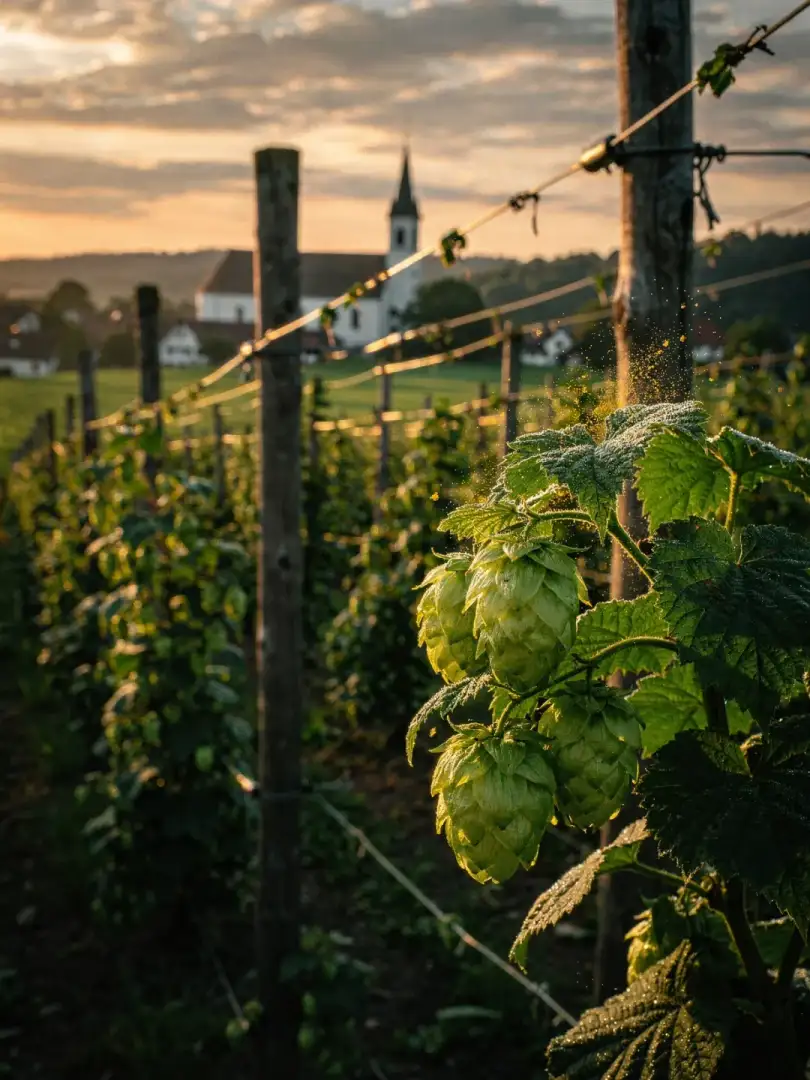
According to Erdinger Weißbräu, its hops come from the Hallertau. That growing region lies within easy reach of the town, though there's no hop cultivation in Erding itself. Which varieties exactly are used, the brewery only describes as "fine aroma hops."
Aroma hops give beer fragrance, bittering hops mainly bitterness. Weißbier needs both in small amounts, since the real star is the yeast. Too much hop character would drown out the banana and clove notes you're looking for in the glass.
That makes the contrast with other Bavarian beer landscapes clear. Where a Pils advertises its hops, an Erdinger Weißbier advertises fruit, spice, and a soft mouthfeel.
Hops are also a preservative. They inhibit certain microbes in beer, which is why old-school brewers valued them. For Weißbier, that role is minor, since the yeast already protects the beer, and it's meant to be drunk young anyway.
Anyone wanting to test the bitterness for themselves should drink a Pils and a pale Weißbier back to back. The Pils lingers on the palate, while the Weißbier glides smoothly on. That's exactly the difference the IBU scale captures in numbers, even with the Urweiße from Erding, which shows almost no bitterness at all.