Bottle Fermentation
Yeast & Fermentation
Why is Weißbier cloudy, and why does it smell like banana? Because it's top-fermented. The yeast works at warm temperatures and collects at the surface as it does. It produces aroma compounds that smell of ripe banana and clove, and it often stays in the beer, which explains the haze.
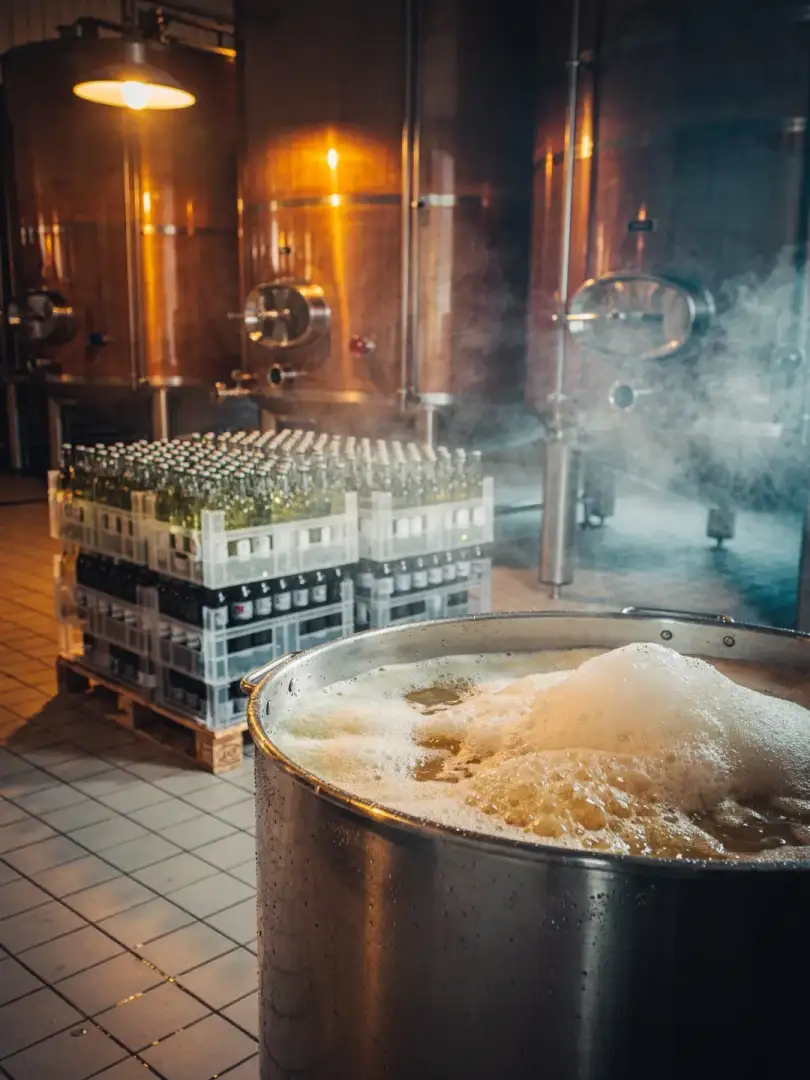
By its own account, Erdinger Weißbräu still uses bottle fermentation today. After primary fermentation, fresh yeast is added along with wort, the bottle is sealed, and secondary fermentation takes place right in the glass. It takes three to four weeks for the Weißbier to finish developing its fine yeast character.
This is how the carbonation forms naturally within the beer itself. The result is a fine, long-lasting head and a freshness that filtering rarely achieves. That applies to Hefeweißbier, not to filtered Kristallweizen.
The counterpart is the tavern's own house brewery. Smaller brewers rely on casks and short distances, selling their beer fresh on-site. Home brewers who brew only for themselves remain tax-exempt as long as they produce up to two hectoliters a year.
So industrial and tavern brewing both use the same kind of yeast, but take different paths. The large operation needs consistency, the tavern needs speed and freshness. Both approaches are valid, only the flavor differs.
The curious drinker compares a bottled Weißbier with a freshly tapped cask beer. The bottle often tastes rounder and yeastier, the cask livelier and lighter. Both are Hefeweißbier and belong to the family of top-fermented beers.