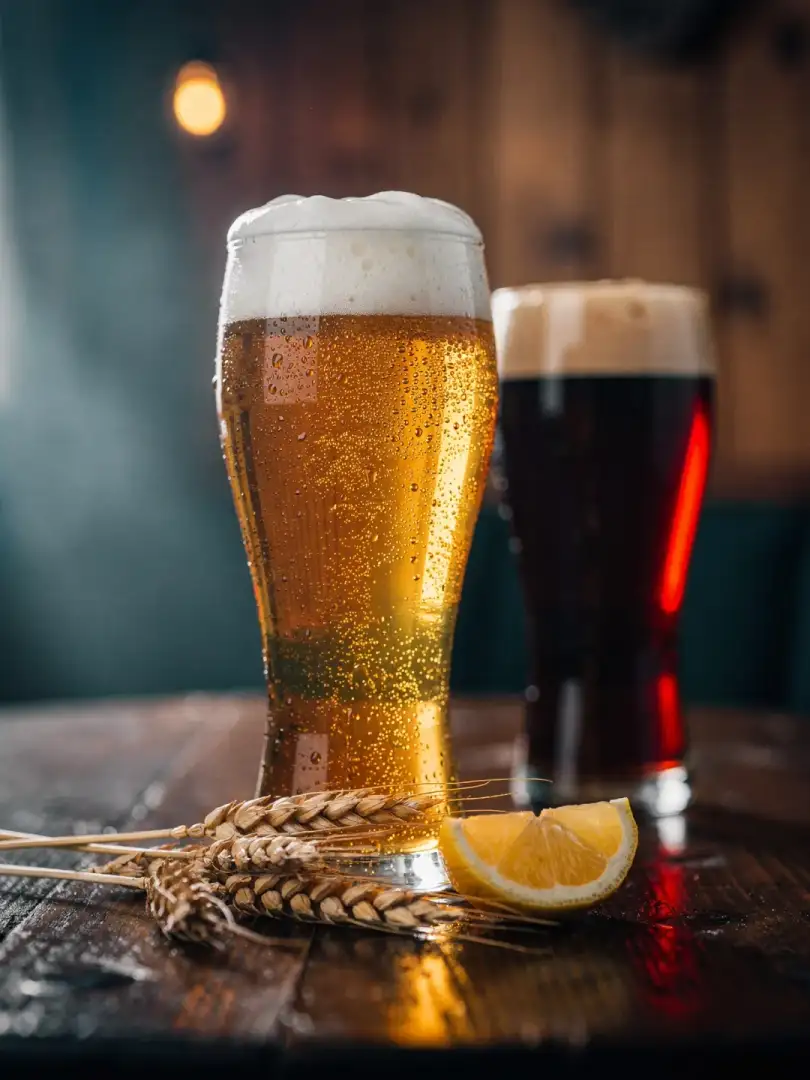
Pale and Dark
Beer Styles
What's the difference between Weißbier, Weizenbier, and Hefeweizen? None. In Bavaria it's called Weißbier, elsewhere Weizen, and Hefeweizen emphasizes that the yeast stays in the glass. It's a top-fermented beer made from wheat and barley.
Pale Weißbier is Erding's standard image, the one Erdinger Weißbräu bottles on a massive scale. It's golden-yellow to amber, smells of banana, clove, and bread, and tastes soft with little bitterness. According to BJCP, it ranges from 4.3 to 5.6 percent ABV. The brewery states its Urweiße at 4.9 percent with 11.9 degrees Plato original gravity.
Original gravity, measured in degrees Plato, is the sugar content of the wort before fermentation. The higher it is, the more alcohol can result. At 11.9 degrees, this beer is a classic full-strength beer of medium strength.
Dark Weißbier gets its color and roasted note from dark malt. It smells of caramel, bread, and a touch of chocolate, with the fruit notes taking a back seat. The Dunkles is less bitter than many expect.
Kristallweizen is filtered, clear Weißbier. Without the yeast, it appears bright and leaner. Anyone looking for the difference between Hefeweizen and Pils will find it most clearly in the glass: cloudy and fruity versus clear and sharp.
Then there are the strong beers. A Weizenbock needs 15.7 to 21.6 degrees Plato original gravity according to BJCP and reaches 6.5 to 9 percent ABV, making it a Weißbier in style only, not in strength. Such beers are rare and belong more to autumn and winter.
Pale Weißbiertop-fermented
- Original gravity
- 11–13.1 °P
- Alcohol
- 4.3–5.6 % vol
- Bitterness
- 8–15 IBU
- Colour
- 4–12 EBC
Cloudy, golden-yellow, banana and clove, soft and barely bitter.