Yeast and Lactic Acid
Yeast & Fermentation
Why is Gose sour? Because lactic acid bacteria work alongside the yeast. They convert part of the sugar into lactic acid, the same acid found in yogurt. The style guidelines therefore classify Gose as mixed-fermentation. Mixed means several microorganisms ferment the beer together.
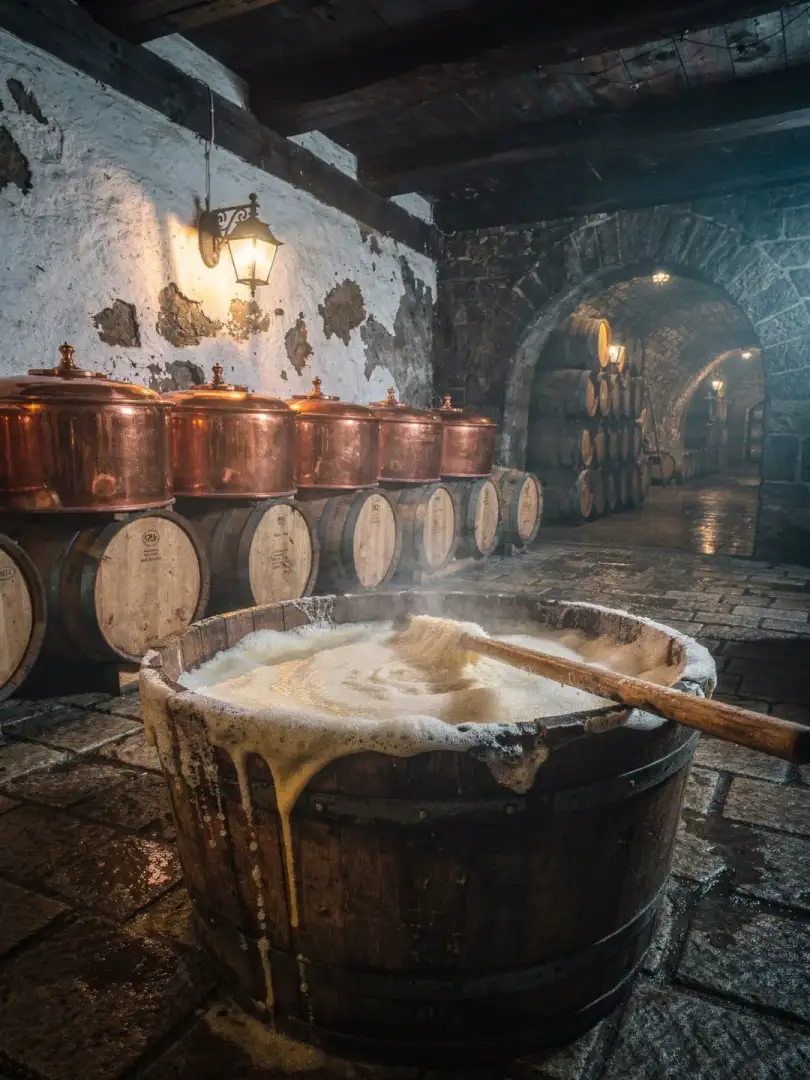
In the past, this happened naturally. According to tradition, the brewing vessels stood open, and wild yeasts and bacteria from the air, the walls and the timber beams settled into the wort. We call this spontaneous fermentation. It was risky, since brewers never quite knew what would grow in the barrel, which is why many later brewers switched to brewing Gose with cultured yeast only.
Today, brewers generally work with precision. Brauhaus Goslar describes its pale Gose as top-fermented. Top-fermenting yeast works at mild temperatures and gathers at the top of the vessel. It lends the beer fruity notes that pair well with the acidity. Lactic acid is produced either by bacteria or added directly, a practice that varies from brewery to brewery.
Salt and coriander go into the kettle along with the wort itself. The salt rounds out the acidity, while the coriander lends a faintly lemony, spicy note. Both must be dosed precisely, since too much salt makes the beer hard to drink.
Pils brewing follows an entirely different path. Hasseröder in Wernigerode and other Harz Pils brewers use bottom-fermenting yeast, which ferments cold and then lagers in tanks for weeks at just a few degrees above freezing. That's what gives Pils its clarity and smoothness. Gose aims for the opposite: lively, lightly hazy, fresh.