Light on Bitterness
Hops
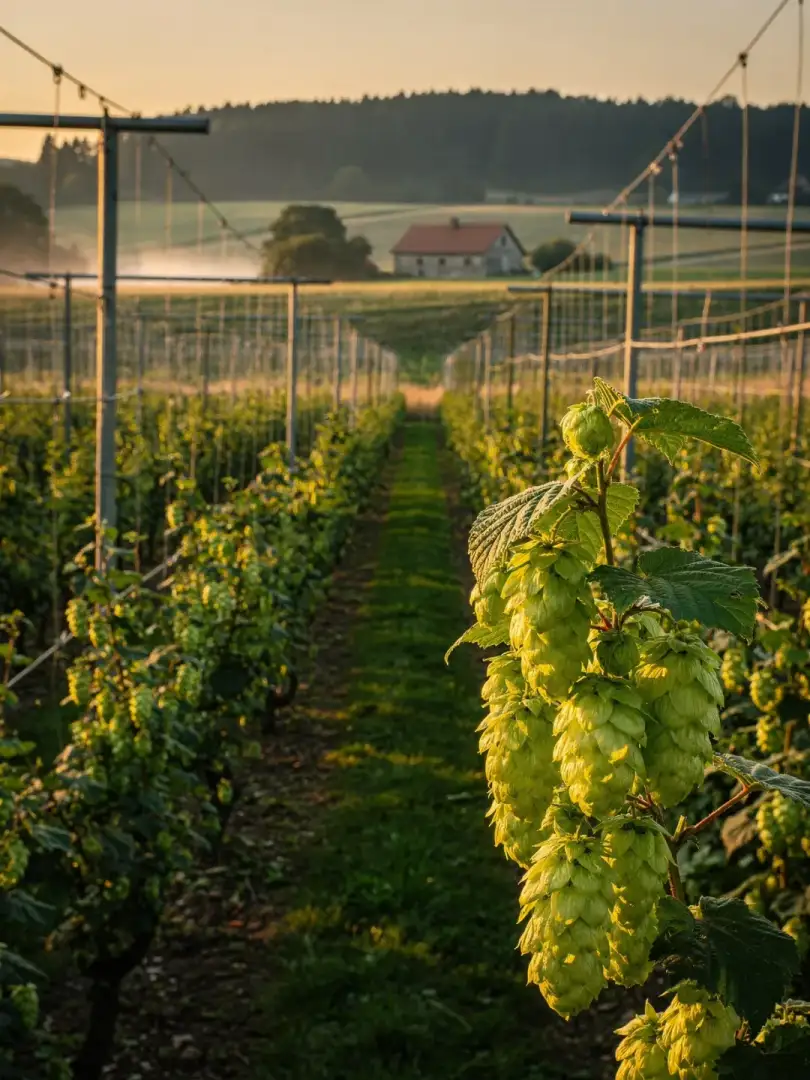
Hardly anyone grows hops in the Harz itself; the range simply isn't hop-growing country. Hops come from Germany's major growing regions, which together covered nearly 18,962 hectares in 2025, according to BarthHaas figures. The nearest growing area for Harz brewers is Elbe-Saale in Saxony-Anhalt and Thuringia, while the Hallertau in Bavaria remains by far the largest.
In Gose, hops deliberately take a back seat. Per the style guidelines, bitterness sits at just 5 to 12 IBU. IBU stands for International Bitterness Units, a measure of how much bitter hop compound is in the beer; a Pils, by comparison, sits considerably higher at 22 to 40 IBU. That small amount is enough to keep Gose from turning sweet, leaving the rest of the impression to acidity, salt and coriander.
Hops serve two purposes. Boiled early in the brew, they lend bitterness and help preserve the beer. Added late, they contribute mainly aroma, think floral, herbal or citrus notes. For a Gose, a restrained addition usually suffices so the hops don't mask the tartness.
It's different for Harz Pils. A Pils needs bitterness so the finish comes off dry, and German brewers typically turn to domestically grown hops for that. The Altenau brewery cites hops from Germany's finest growing regions without naming specific varieties. A reliable list of varieties used by individual Harz breweries is scarcely available to the public. For both Pils and Gose, hops serve as seasoning and preservative at once.