Wheat and Pilsner
Malt & Grain
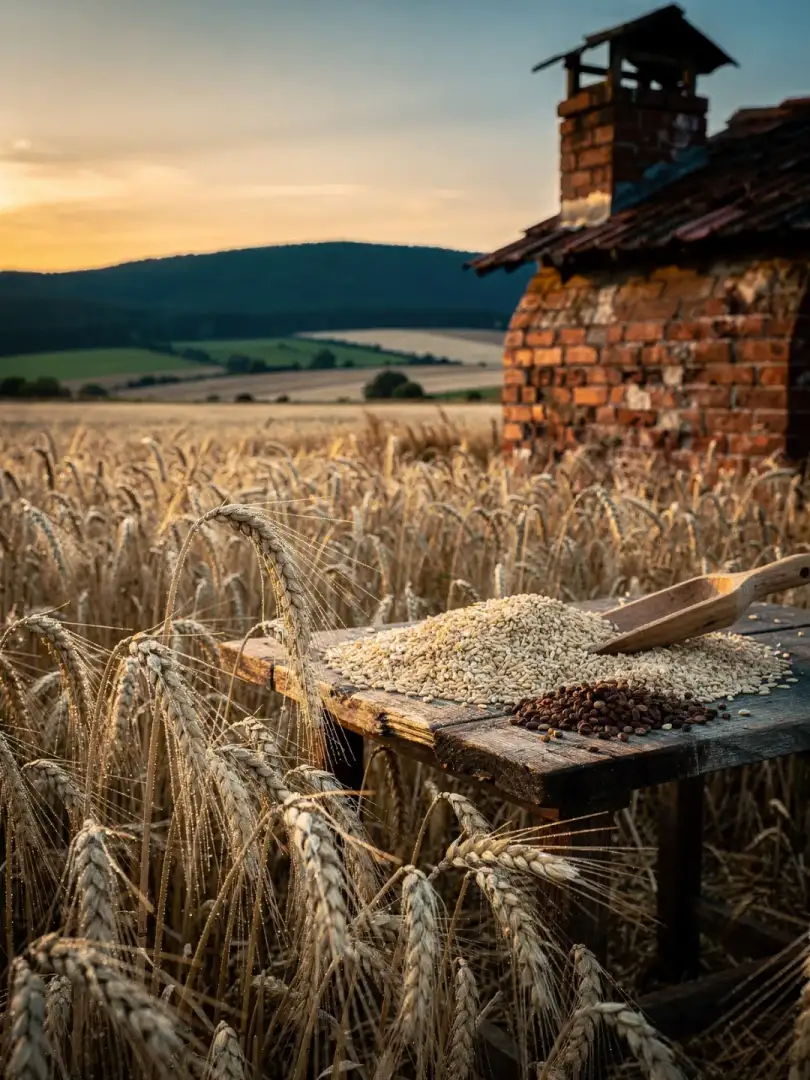
What goes into a Gose besides barley? Wheat, and plenty of it. A historic Gose recipe calls for three malts: Pilsner malt, wheat malt and a touch of Munich malt. Malt is grain that's been germinated and then kilned, meaning gently dried, which provides the sugar for fermentation. Pale Pilsner malt forms the base, while wheat malt clouds the beer and gives it a soft body.
Munich malt is kilned at a higher temperature and tints the beer golden, or, in larger amounts, reddish. Alongside its pale Gose, Brauhaus Goslar also pours a dark version, which the brewery describes as reddish-brown with a faint smoky-malty flavor. That description comes from the producer.
Gose is among the wheat-heavy beer styles, but it isn't a Bavarian-style Weissbier. Depending on the standard, its original gravity sits between 9 and 13.8 degrees Plato. Original gravity is the sugar content of the wort before fermentation, measured in Plato, and it helps determine the final alcohol content. For Gose, it tends to stay moderate.
Alongside it, the Harz also has its classic Pilsner brewing tradition. Hasseröder in Wernigerode brews its Pils from pale barley malt, and the Altenau brewery likewise cites regional barley as its foundation. The brewery states its barley comes from the Oker valley. Exactly which farms supply it can't be verified from the outside, so the claim remains what it is: a statement from the producer.
One difference remains between the two worlds. Pils aims for clarity and a dry, spicy bitterness. Gose aims for freshness and a certain tartness that comes from the yeast rather than the malt.