Cool and Slow
Yeast & Fermentation
Is Hamburg beer top- or bottom-fermented? The Pils that defines the city today is bottom-fermented. Bottom-fermenting yeast sinks to the bottom at the end of fermentation and works at cool temperatures, usually around 8 to 12 degrees Celsius. In the Middle Ages, however, Hamburg brewed top-fermented beer, just like everywhere else.
Bottom-fermenting yeast only gained ground in northern Germany during the 19th century. After that, lager gradually replaced the old top-fermented city beer. In 1883, Emil Christian Hansen isolated the first pure culture of a bottom-fermenting yeast at the Carlsberg laboratory in Copenhagen. The Carlsberg Group today owns Holsten and Astra.
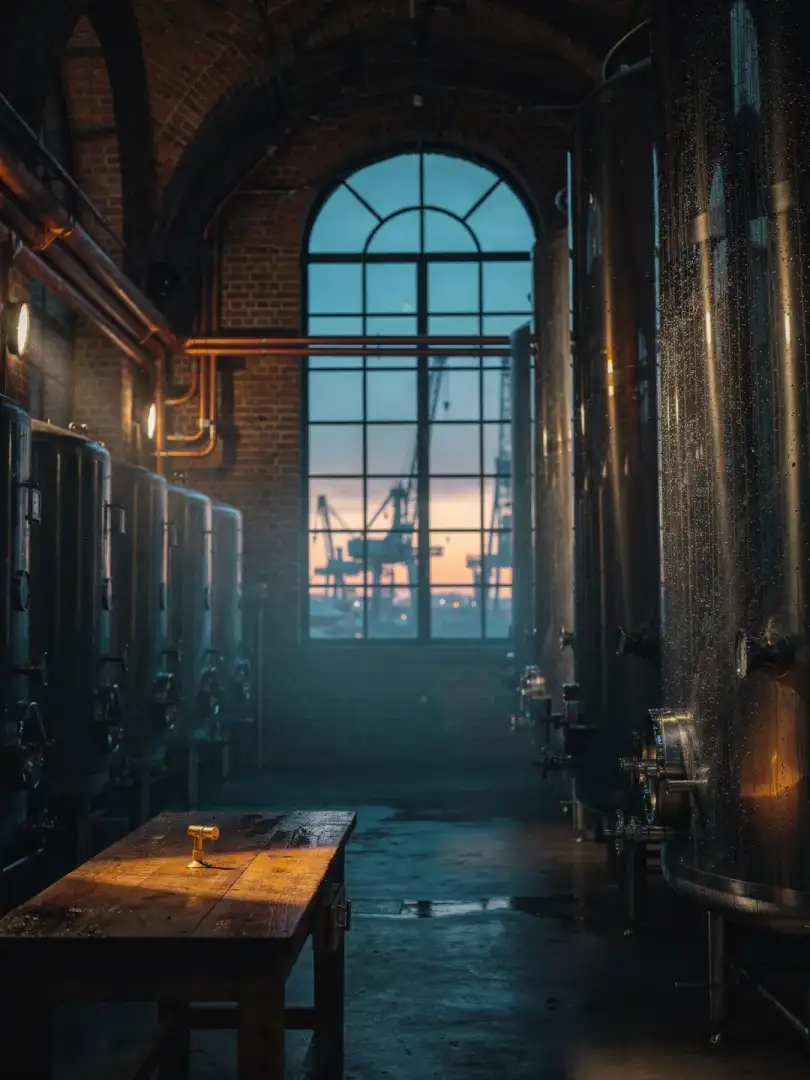
After primary fermentation comes lagering. The young beer matures at temperatures close to freezing over several weeks, a process called lagering; the yeast settles out, the beer clears, and the carbonation binds. In Hamburg, this takes place in tanks, since there are no rock cellars available.
How long does this take? For a Pils, the journey from wort to glass usually takes several weeks, depending on the brewery and the beer. Exact timings are disclosed by the breweries themselves, so no fixed figures are given here. Generally, the longer a beer matures cold, the rounder and smoother it becomes.
Small brewhouses like the Gröninger Privatbrauerei or Blockbräu are happy to show visitors their kettles and tanks on site. The same goes for St. Pauli and the Reeperbahn, for instance at the Astra St. Pauli Brauerei, which opened at the end of 2019.