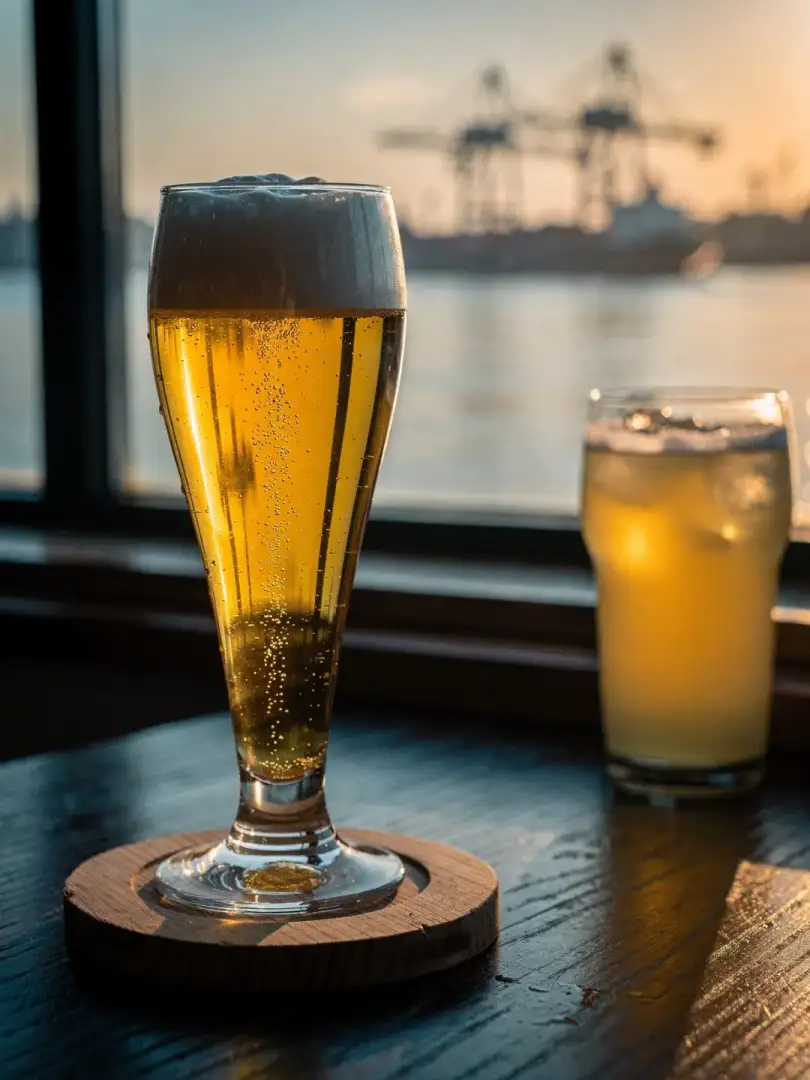
Pils and Alsterwasser
Beer Styles
What does a northern German Pils, as drunk in Hamburg, taste like? A German Pils is pale, bottom-fermented, clear, and carries a distinct yet clean bitterness. According to the style guidelines, it has between 4.4 and 5.2 percent alcohol. In the north, it's considered sharper and drier than the Helles found in the south.
The style originated in Pilsen. There, on October 5, 1842, the Bavarian brewer Josef Groll brewed the first batch, a pale, bottom-fermented beer. What was new was the pale color; Bavarians had been brewing bottom-fermented beer for a long time already. In Germany, the word "Pils" is a generic term and therefore not a protected designation.
How does Pils differ from Helles? At 16 to 22 bitterness units, Helles is milder and sweeter on the malt, while Pils, at 22 to 40, sits clearly higher and comes across drier. Both are bottom-fermented and look similar at first glance.
Holsten, Astra, and Ratsherrn all brew Pils in Hamburg, each with its own signature style. In the south, people would reach for a Helles, but in the north, Pils remains the standard, just as true on St. Pauli as in Altona or along the Elbe.
Many Hamburg pub menus also list Alsterwasser. It's the northern German name for a Radler, a beer-based mixed drink combining beer and lemonade, usually in roughly equal parts. The name is a nod to the Alster river, though it has nothing to do with the river's actual water. There's no official style guideline for Radler.
Pilsbottom-fermented
- Original gravity
- 11–12.4 °P
- Alcohol
- 4.4–5.2 % vol
- Bitterness
- 22–40 IBU
- Colour
- 4–8 EBC
Pale gold, clear, fine white foam, crisp hop bitterness, dry finish.