Bitterness and Aroma
Hops
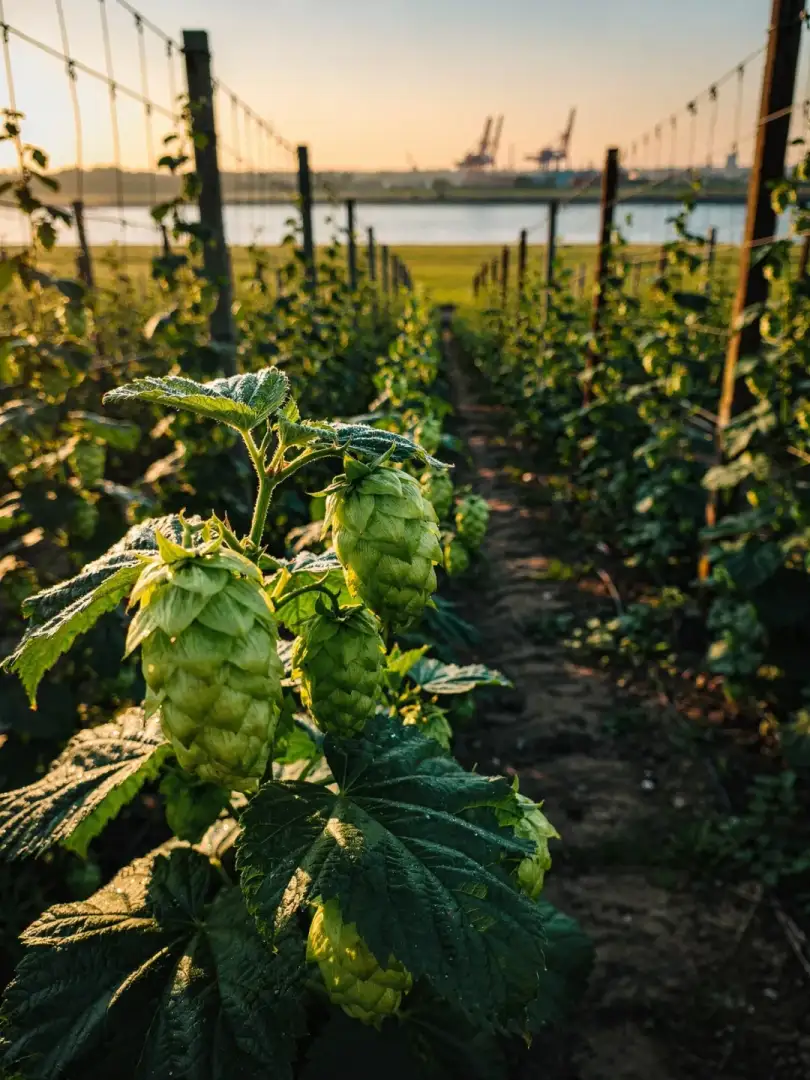
Does hops grow in Hamburg? Hardly—the hops used for Hamburg beer come from Germany's established growing regions. In 2025, Germany had 18,962 hectares under hop cultivation, of which around 17,129 hectares were in the Hallertau. The Elbe-Saale region, further upriver along the Elbe, accounts for about 1,550 hectares.
Hops have been part of Hamburg beer since the Middle Ages. Production of hopped beer likely began here in 1233, according to Hamburg museums and history books. Hops kept beer fresh longer and made long sea voyages possible, while also lending a pleasant bitterness. The competing herb gagel achieved neither of these things. That gave Hamburg an edge in exports, since beer had to survive weeks at sea.
Bittering hops and aroma hops serve different purposes. Varieties like Magnum and Herkules from the Elbe-Saale region deliver mainly bitterness. If hops are boiled early in the process, they release bittering compounds; added late, they leave more aromatic compounds in the beer.
A German Pils, under the style guidelines, falls between 22 and 40 International Bitterness Units (IBU), the measure of bitterness. Hamburg's Pils sits somewhere within that range; individual values are disclosed by the breweries themselves and vary slightly higher or lower depending on the brand.
The craft beer scene often reaches for hop varieties from the US or New Zealand, which bring citrus and tropical fruit notes. Ratsherrn, from the Schanzenhöfe, counts itself among the pioneers of this movement.
Today, a Pils from Altona or St. Pauli carries a distinctly northern German bitterness, even though the hops themselves come from the Hallertau.