Pale Pilsner Malt
Malt & Grain
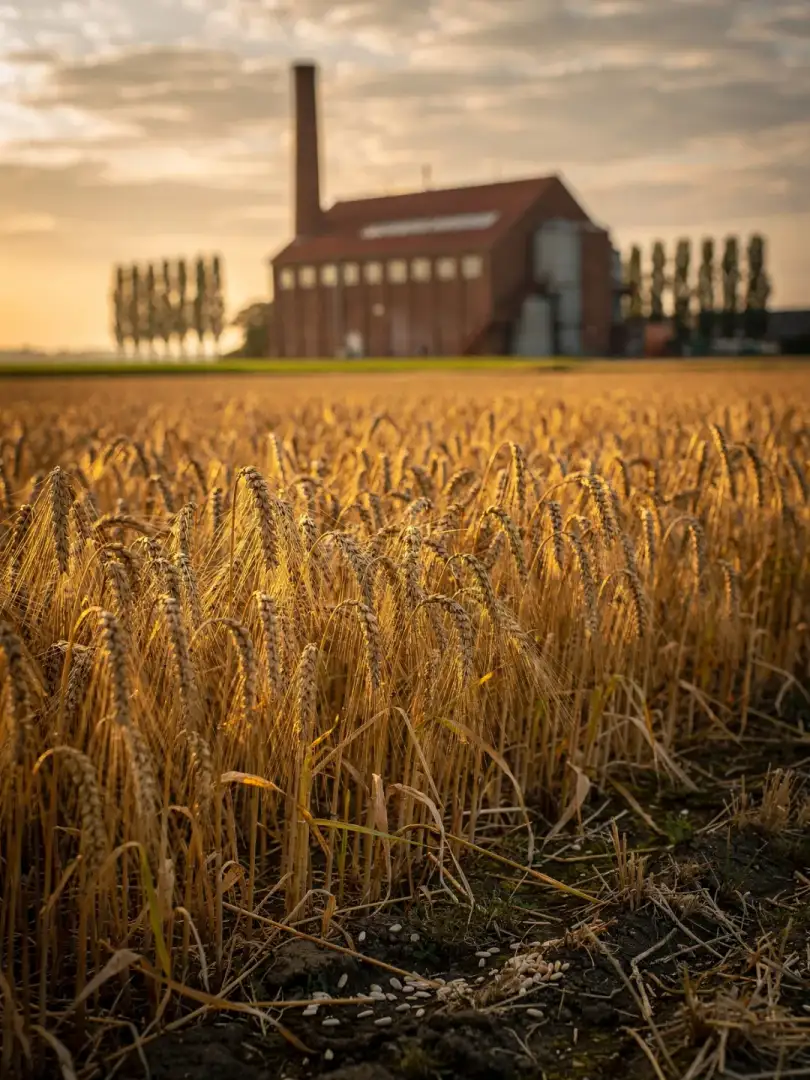
What is Pilsner malt, and why does it define Hamburg's Pils? Brewing barley is encouraged to germinate, a process called malting, and is then dried in the kiln. Pilsner malt is dried especially gently, so it stays pale and tastes of bread crust and fresh grain.
For bottom-fermented beers, German law permits only barley malt, hops, yeast, and water. The Reinheitsgebot of 1516, however, applied only in Bavaria. Hamburg's medieval brewers followed the regulations of their own city council, not the duke in Ingolstadt.
Which maltings supply Hamburg's breweries and where their barley comes from varies by company. There's no uniform data on this. As a port city, Hamburg has imported grain and malt by water for centuries.
Alongside the pale base malt, smaller brewhouses like Blockbräu and the Gröninger Privatbrauerei also use specialty malts for certain styles. Caramel malt adds sweetness and color, while heavily roasted malt lends notes of coffee and chocolate.
A Pils lives and dies by its malt, even though everyone talks about the hops. That's as true in Altona as it is in Bamberg. Only a clean, lean malt body can carry the bitterness without the flavor turning thin or sharp.
With Holsten Pils, Astra, and Ratsherrn Pils, this interplay is the whole point. Here, the malt provides body and a light sweetness, while the hop bitterness pushes back against it. The original gravity, meaning the sugar content of the wort before fermentation, falls between 11 and 12.4 degrees Plato for a Pils under the style guidelines.