Bottom-Fermented, Cool, Slow
Yeast & Fermentation
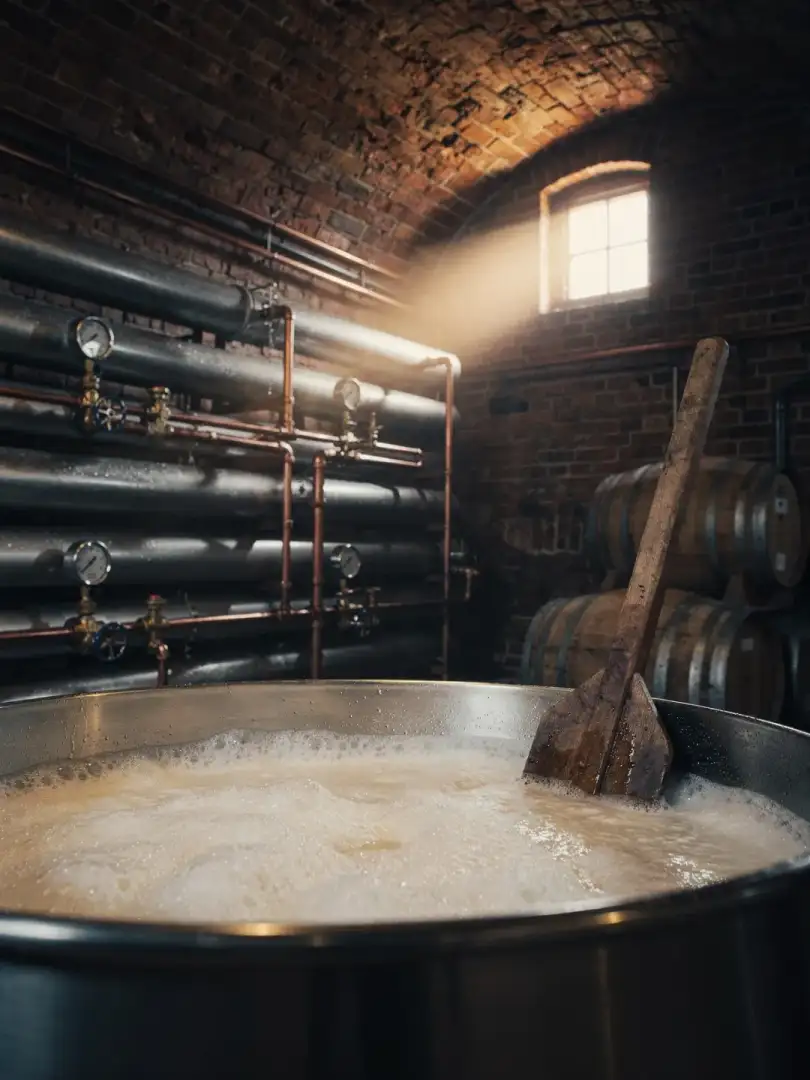
Pils is bottom-fermented, and that's how Licher and Binding, the two biggest names in the region, brew it. Bottom-fermented means the yeast sinks to the bottom of the fermentation tank after doing its work and operates at low temperatures, usually in the range of about 8 to 12 degrees Celsius. The result tastes clean, without much fruitiness.
How long does it take for a lager to be ready? After primary fermentation it matures for weeks more in the cold lagering tank, hence the name lager. During this time the beer becomes clearer, as cloudy particles settle out, and unwanted aromas like butter or green apple break down. For a wheat beer like Schöfferhofer, the opposite is true: it ferments top-fermented, warm and fast.
Lager yeast, Saccharomyces pastorianus, is a hybrid of two yeast species. Emil Christian Hansen isolated the first pure culture of a bottom-fermenting yeast in Copenhagen in 1883. Since then breweries have kept their own strain pure and carried it forward from brew to brew. The yeast is thus often a trade secret you can taste in the glass but find written down nowhere.
In Frankfurt, two fermentations collide. Beer works with malt sugar from the wort, Apfelwein with sugar from pressed apples. So what arrives in the Bembel in Sachsenhausen comes from an entirely different yeast workshop than the Pils in the glass beside it. With beer, the grain determines the sugar; with Apfelwein, the year's harvest does. Both drinks belong to the image of Hesse, they just follow different rules.