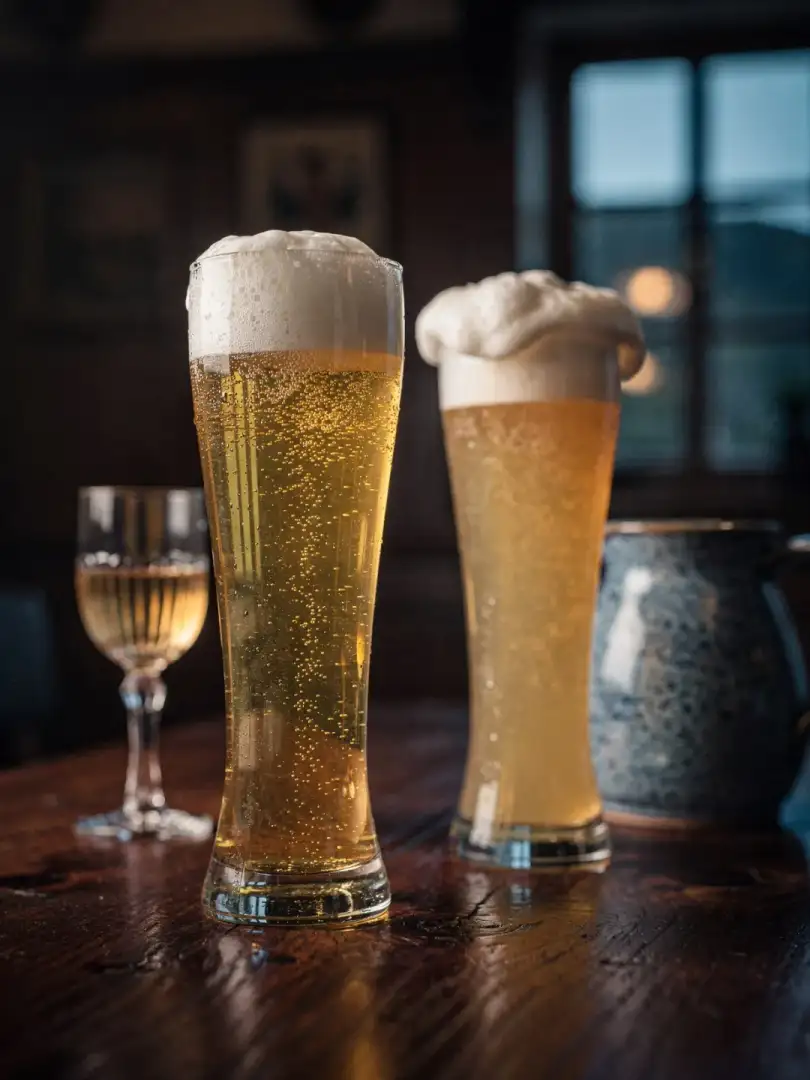
Pils, Country Beer, Wheat
Beer Styles
Hesse's flagship beer is the Pils. It is pale, bottom-fermented, noticeably bitter and dry on the finish, and the brands Licher Pils and Binding Römer Pils stand for it. In Germany, Pils is a generic term and not legally protected, unlike "Pilsner Urquell," which is a brand.
How does a country-style beer (Landbier) differ from Pils? The name has no fixed standard. Licher releases a Hessenquell Landbier and presents it as a regional specialty. One expects a milder, less bitter profile than with Pils, but the exact recipe remains up to the brewery. Anyone trying a Landbier should therefore not expect a fixed pattern but should read the label and the brewery's own description.
Then there's Weißbier, usually called Weizen here, such as Schöfferhofer. The difference from Pils lies in the yeast and the wheat malt: Weizen is top-fermented, cloudy, with aromas of banana and clove, and considerably less hopped. In pale wheat beer, these aromas aren't an additive but a byproduct of the yeast.
And Apfelwein? It's not a beer and belongs to no beer family. It's fermented from apples, tastes sour and tart, and is traditionally served in Frankfurt from the Bembel into glasses with a diamond pattern.
Important for comparison: Pils tastes lean and bitter, Weizen soft and fruity, Apfelwein sour and tart. The figures below are competition ranges from the BJCP guidelines, not a Hessian regulation. Individual beers fall outside them; the true value is revealed by the label.
Pilsbottom-fermented
- Original gravity
- 11–12.4 °P
- Alcohol
- 4.4–5.2 % vol
- Bitterness
- 22–40 IBU
- Colour
- 4–8 EBC
Pale golden color, firm head of foam, pronounced hop bitterness, dry finish.