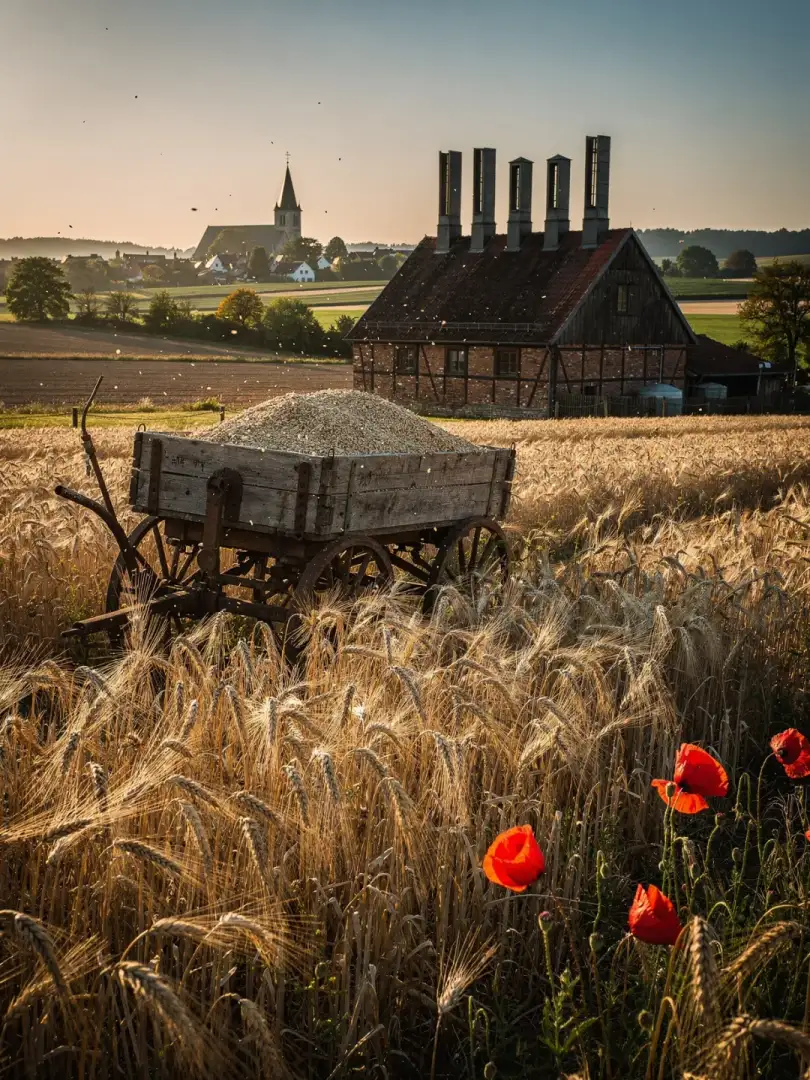
Pilsner Malt, Wheat
Malt & Grain
The beer that most often fills a glass in Hesse is pale, and it owes that color to its malt. For Licher Pils or Binding Römer Pils, brewers use Pilsner malt made from barley that is carefully dried so it takes on hardly any color. The higher the heat during drying, the darker and more roasted the beer would turn out.
How does barley become malt? The grains are first soaked in water and begin to germinate. In doing so they convert starch in a way the yeast can later make use of. After a few days, germination is halted with warm air in the kiln, the drying oven of the maltings. The moist green malt is thereby turned into stable malt. Only this malt goes to the brewery, where it is milled and mixed with warm water to form the mash.
With wheat beer the mixture changes. A Schöfferhofer Weizen needs wheat malt alongside barley malt, and the common industry rule calls for at least 50 percent wheat. No legal basis for this has been documented. Top-fermented beers may also contain malt other than barley malt, with Bavaria being an exception.
Which maltings supply Hesse's breweries is something most companies do not disclose. Only the basic principle is documented: anyone brewing a country-style beer like Licher's Hessenquell chooses malt according to the picture meant to appear in the glass, usually golden and mild. Whether individual batches actually come from the region varies by brewery. Hesse is a land of considerable farming, and barley is among the common field crops there.