Barley, Wheat, Sugar
Malt & Grain
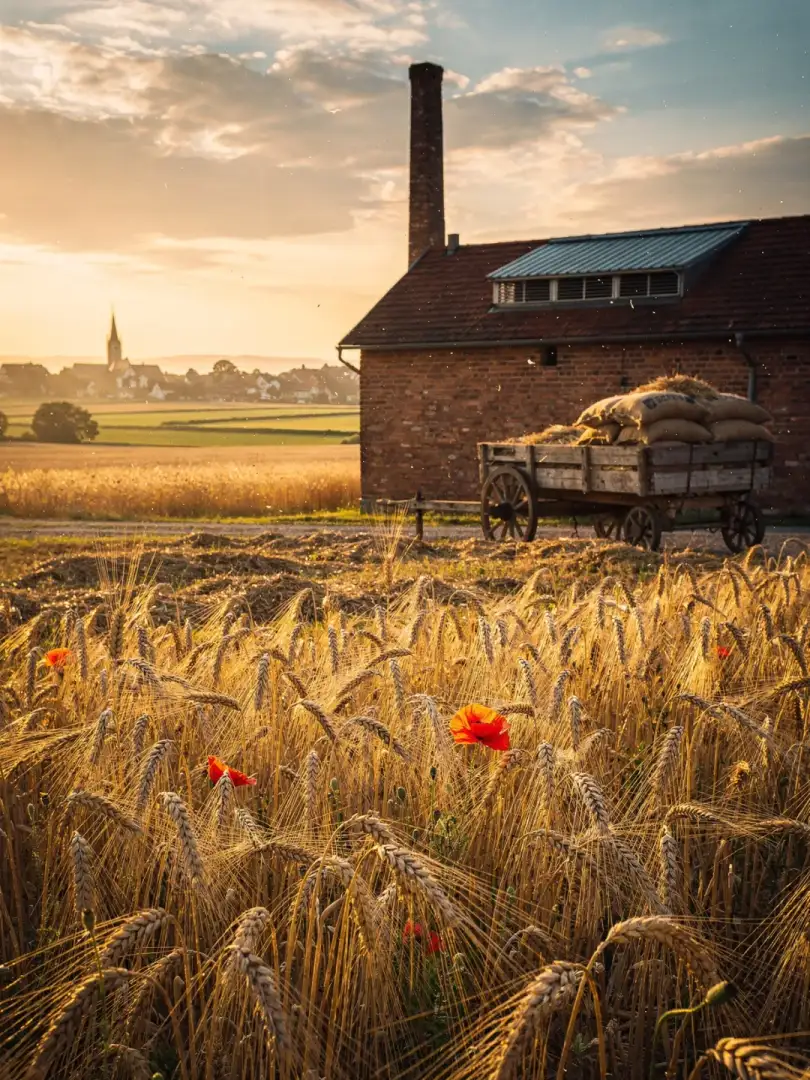
Only barley, said the 1516 territorial ordinance, and it meant it strictly. Wheat and rye were thus reserved for bread, as the common explanation goes. Barley first had to become malt: the grain is soaked, allowed to germinate, and then dried in a kiln so the starch inside is ready for fermentation.
Anyone who loves Weissbier knows the exception. Wheat beer actually contradicted the barley rule of 1516, yet the dukes granted special privileges: to the Degenberg family in 1548, and to the Schwarzenberg family in 1586. When the Degenbergs died out in 1602, Duke Maximilian I claimed the wheat beer monopoly for himself. In Ingolstadt today, it's simply part of daily life—take Herrnbräu's Hefeweißbier, a beer that also contains wheat malt.
What counts legally as malt is defined in the Provisional Beer Law: any grain artificially induced to germinate. Bottom-fermented beer, accordingly, may only be made from barley malt, hops, yeast, and water. For top-fermented beer, other malts are permitted outside Bavaria—wheat and rye malt, plus technically pure sugar.
That doesn't apply in Bavaria. The Free State banned sugar in 1924, and the implementing regulation of the Beer Law still upholds this Bavarian rule today. So a Weissbier from Ingolstadt may contain wheat malt, but never sugar.
You can see in the glass how malt creates color. Pale malt gives you Helles, more heavily kilned malt gives you Dunkel. How much of each goes into the city's brews is something the breweries state in their own descriptions—we deliberately leave out specific figures here.