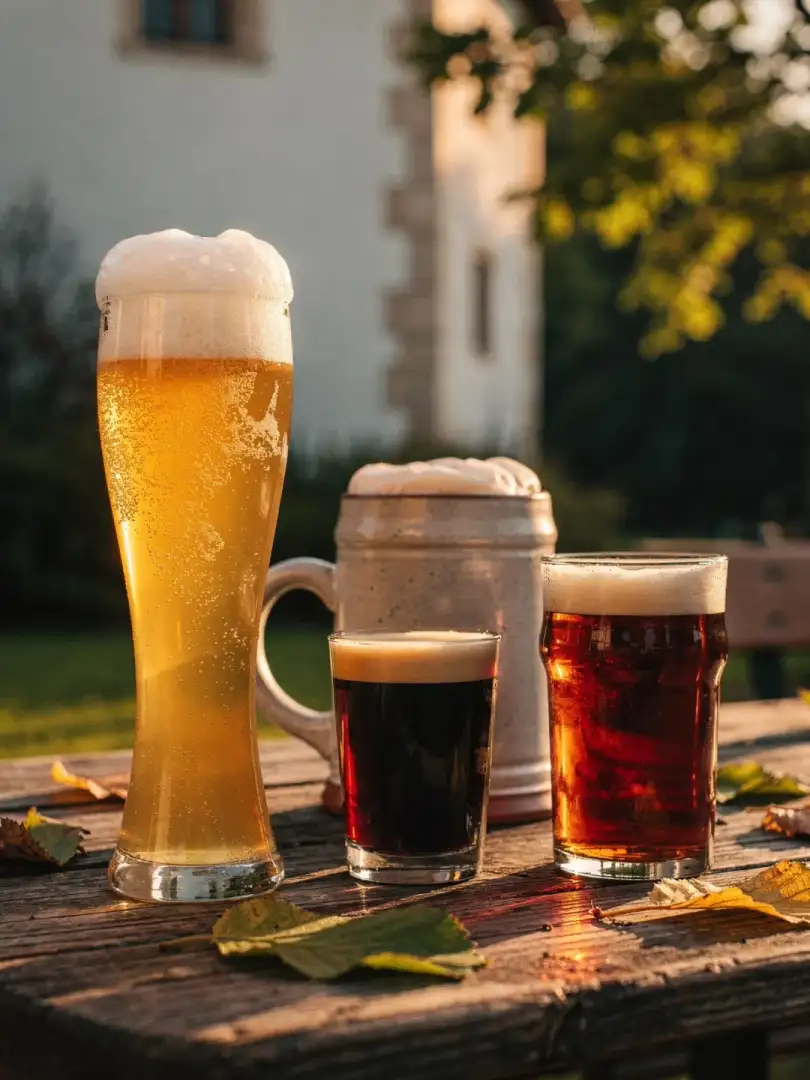
Dunkel, Bock, Weißbier
Beer Styles
What is a Munich Dunkel? A bottom-fermented, dark brown beer with aromas of bread crust and light caramel, free of any burnt taste and without much bitterness. Weltenburger Kloster's Barock Dunkel is considered the textbook example and has repeatedly been named the world's best Dunkel — according to the brewery, in 2004, 2008, and 2012.
How does Dunkel differ from Schwarzbier? Dunkel tastes of malt and bread, while Schwarzbier is drier, with roasty notes reminiscent of coffee.
What is a Bockbier? It's a stronger, bottom-fermented beer with at least 16 degrees Plato original gravity and roughly 6 to 7 percent alcohol. The name comes from the town of Einbeck, not from the billy goat (Bock) later associated with the style. Weltenburger's Asam Bock is a Dunkler Bock, named after the Baroque master builder Cosmas Damian Asam.
What's the difference between Bock and Doppelbock? Doppelbock starts at around 17.5 degrees Plato, making it even stronger, and originated in Munich.
It's no coincidence that these three styles all come from the same area: Dunkel and Bock are the monastery's beers, while wheat beer is the Duke's beer. That also explains why they sit side by side in Kelheim. What's the difference between Weißbier, Weizenbier, and Hefeweizen? Nothing — they're just different words for the same thing: Weißbier is the Bavarian term, Weizen is used elsewhere. Schneider Weisse's Tap 7 Unser Original is just such a pale Hefeweizen, while the Aventinus is a Weizenbock — a stronger, dark version with notes of plum, raisin, and chocolate.
Munich Dunkelbottom-fermented
- Original gravity
- 11.9–13.8 °P
- Alcohol
- 4.5–5.6 % vol
- Bitterness
- 18–28 IBU
- Colour
- 33–55 EBC
Dark brown, bread crust and caramel, low bitterness, a soft finish.