Glass and Foam
Tasting
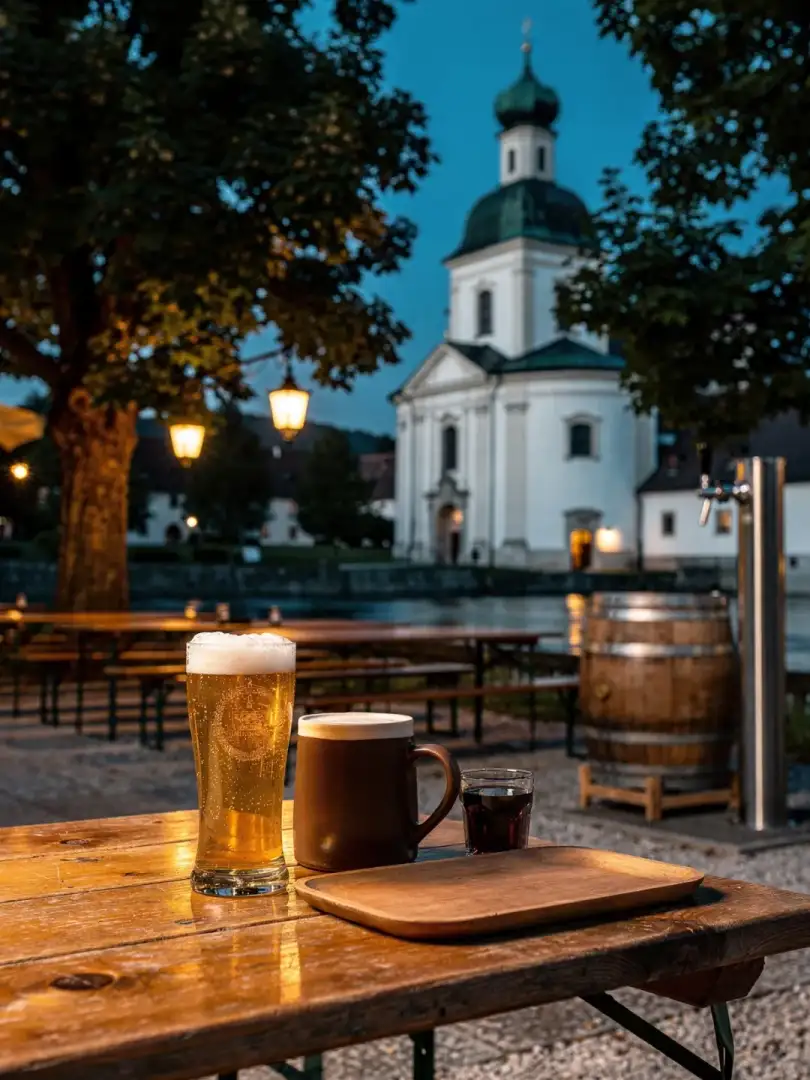
What does Weltenburger Barock Dunkel taste like? First roasted bread and caramel, then a touch of cocoa, with a mild bitterness and barely any acidity. The brewery notes that the unfiltered cask beer in the monastery beer garden travels straight from the brewery to the tap via an underground pipe.
With the Asam Bock, you first notice the sweetness, then the warmth of the alcohol, followed by notes of dried fruit and dark bread. It's a beer for small glasses and slow sips, not for quick drinking.
Schneider Weisse's Tap 7 is served in the tall 0.5-liter Weißbier glass. It flares wide at the top so the dense foam has room to build and the aromas can rise to the nose. The Aventinus is poured into a similar glass, but usually in a smaller measure.
Proper pouring technique matters: tilt the glass, rinse it with cold water first, let the beer run slowly down the side, and straighten the glass upright for the final third. Swirl the remaining beer in the bottle and pour the yeast in carefully afterward.
Temperature makes a big difference. Wheat beer tastes best around 6 to 8°C, while Dunkel and Bock can handle 8 to 10°C so the roasted aromas don't get lost in the cold. Served ice-cold, any of these beers falls flat. In the Weltenburg beer garden and the courtyard of the Weißes Bräuhaus, everything comes freshly tapped, and the difference from a bottle is clear: finer foam, gentler carbonation, and fuller aroma.