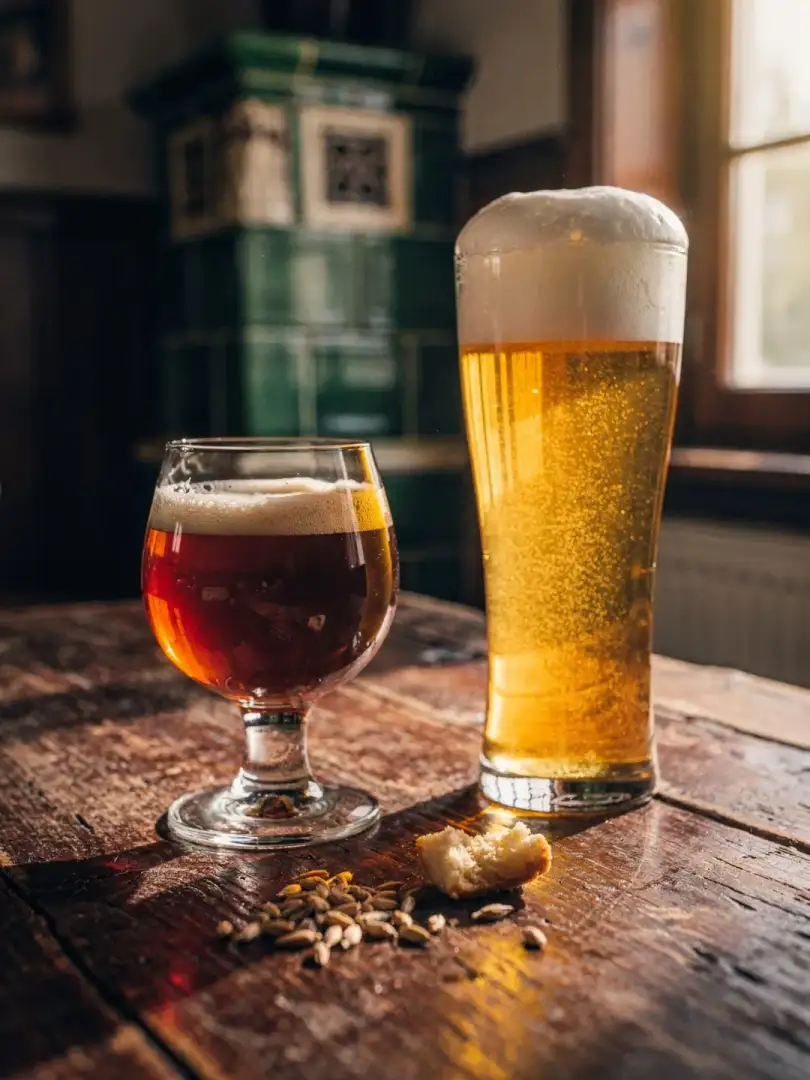
Eisbock and Weisse
Beer Styles
Eisbock is a strong, dark lager from Franconia, from which water has been removed by freezing. The profile below lists values of 9 to 14 percent alcohol and original gravities of 18.9 to 28.1 degrees Plato. Kulmbacher Brauerei lists its Kulmbacher Eisbock as a seasonal winter beer. The color ranges from copper to dark brown, and the flavor recalls raisins, plums and caramel.
How do Bock, Doppelbock and Eisbock differ? Bockbier takes its name from the town of Einbeck, not from the male goat (Bock in German). Doppelbock is a stronger tier, and Eisbock is further concentrated through freezing. All three are bottom-fermenting lagers.
Then there's Weissbier, which represents Bayreuth. According to the brewery, Maisel's Weisse came onto the market in 1955, initially marketed as "Champagner-Weizen." Weissbier, Weizenbier and Hefeweizen all refer in practice to the same thing: a top-fermented beer with a high proportion of wheat malt and visible yeast haze.
The difference from Eisbock is almost as great as between two entirely different drinks. Weissbier is light, sparkling and fruity, at 4.3 to 5.6 percent alcohol. Eisbock is thick, sweet, warming, and meant for small glasses. Anyone who tries both side by side quickly notices just how far apart Bayreuth and Kulmbach are in flavor, even though only a short drive separates them.
This also includes the region's dark Bockbier, as carried by the Mönchshof brand. Under German beer regulations, a German Bockbier can only use that name once it reaches 16 percent original gravity. The BJCP figures in the profile are competition ranges, not legal requirements.
Eisbockbottom-fermented
- Original gravity
- 18.9–28.1 °P
- Alcohol
- 9–14 % vol
- Bitterness
- 25–35 IBU
- Colour
- 33–59 EBC
Copper to dark brown, raisin and caramel, dense body, noticeable warmth.