Small Glasses
Tasting
What does an Eisbock taste like? Dark and dense, sweet at first, then raisins, plums and a touch of caramel emerge, finishing with warmth. It drinks more like a fortified wine than a beer and is meant for slow sips, not least because of its 9 to 14 percent alcohol content per BJCP.
The examples here belong to the region. Kulmbacher Eisbock is one of Kulmbacher Brauerei's seasonal beers. The brewery lists EKU 28 as a strong beer, and the Mönchshof range as Bockbier and Schwarzbier. At Maisel's, the Weisse takes center stage, with its figures printed on the label. Anyone wanting to know exactly how strong a beer really is should check there.
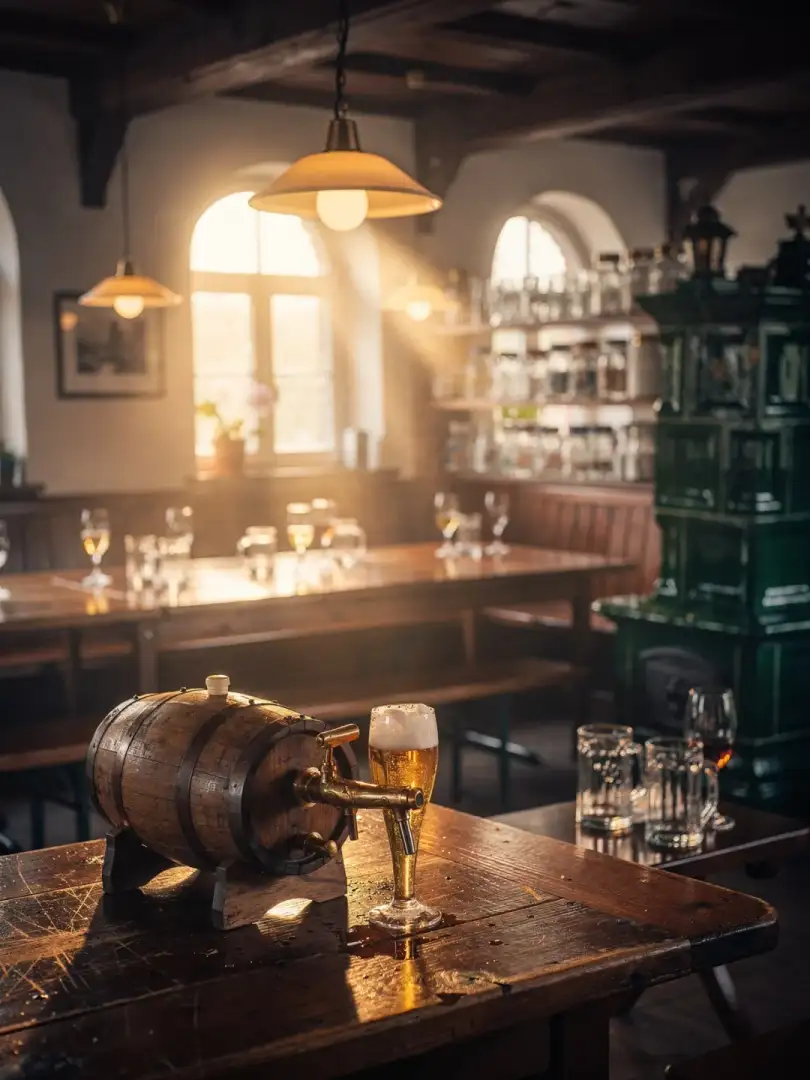
As for glassware: Eisbock is served in a small, bulbous glass with a narrower opening, similar to a tulip shape, so the aromas concentrate. Weissbier calls for the tall, slender wheat beer glass that widens toward the top and accommodates its generous head of foam.
As a rule of thumb for temperature: serve Weissbier fairly cool, at 6 to 8°C (43 to 46°F). Eisbock should be noticeably warmer, around 10 to 12°C (50 to 54°F), otherwise its aroma stays locked away. These are standard recommendations, not strict rules.
Weissbier is poured tilted, in one motion, leaving a small amount in the bottle. Then you give the bottle a quick swirl to lift the yeast off the bottom, and pour the rest on top of the foam. That way the glass doesn't end up half-empty, and the head doesn't turn out too thin.