Barley and Roasted Malt
Malt & Grain
What kind of malt goes into Lübzer Pils? Essentially the same as in any pale Pils: Pilsner malt made from barley. Germinated barley is gently kilned, meaning dried with warm air, which keeps it light in color. This gives the wort its straw-to-gold hue and flavors of bread crust and honey.
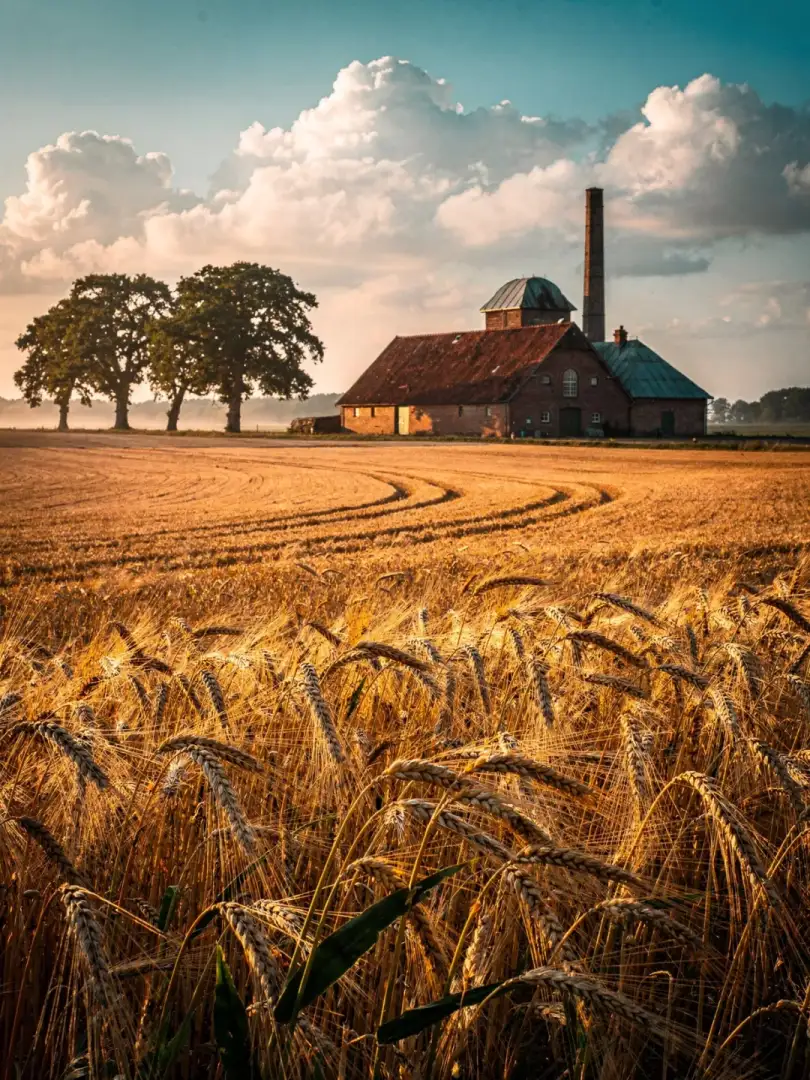
Barley grows well in the north on the clay-rich soils. Winter barley is sown in autumn, summer barley in spring, and for malting purposes, a low protein content matters most. We haven't been able to confirm which maltsters supply the region's breweries, so we won't name any here.
Pilsner malt forms the foundation, and the rest comes down to quantity. A Pils gets by with a single malt type, while dark beers need more. Schwarzbier, as brewed by Störtebeker Braumanufaktur, includes heavily roasted malts as well. These turn it nearly black but contribute roasted notes like cocoa and bread, not the bitterness of burnt grain.
Roasted malt is made by drum-roasting barley malt at high heat until it darkens. The longer and hotter the process, the darker the color and flavor. Stylistically, Schwarzbier belongs to Thuringia and Saxony, but in the north, Störtebeker has given it a firm place on the shelf. You can tell just by seeing it sit right next to the Pils in Stralsund.
Wheat, rye, or corn barely feature in the coast's flagship beers. If you're looking for them, you'll find them more in the specialty beers of smaller breweries. For Pils and Schwarzbier, barley malt is all you need—and cleanly malted barley matters more than any variety of ingredients.