Chalk, Springs, Rock
Water & Soil
The Münsterland is flat, green, and full of water. Beneath the fields lies a vast basin of chalk rock where rainwater collects, and the hills to the west, known as the Baumberge, are the source of the yellowish-white limestone sandstone used to build much of Münster. For brewing water, chalk means plenty of dissolved minerals and generally hard water.
Hardness readings vary from well to well and year to year. What's certain is the general trend: lime-rich water absorbs acidity and makes the mash less sour, which makes it easier to brew with richly kilned malt than with a pale, delicate one. Lighter beers need softer water or some form of treatment.
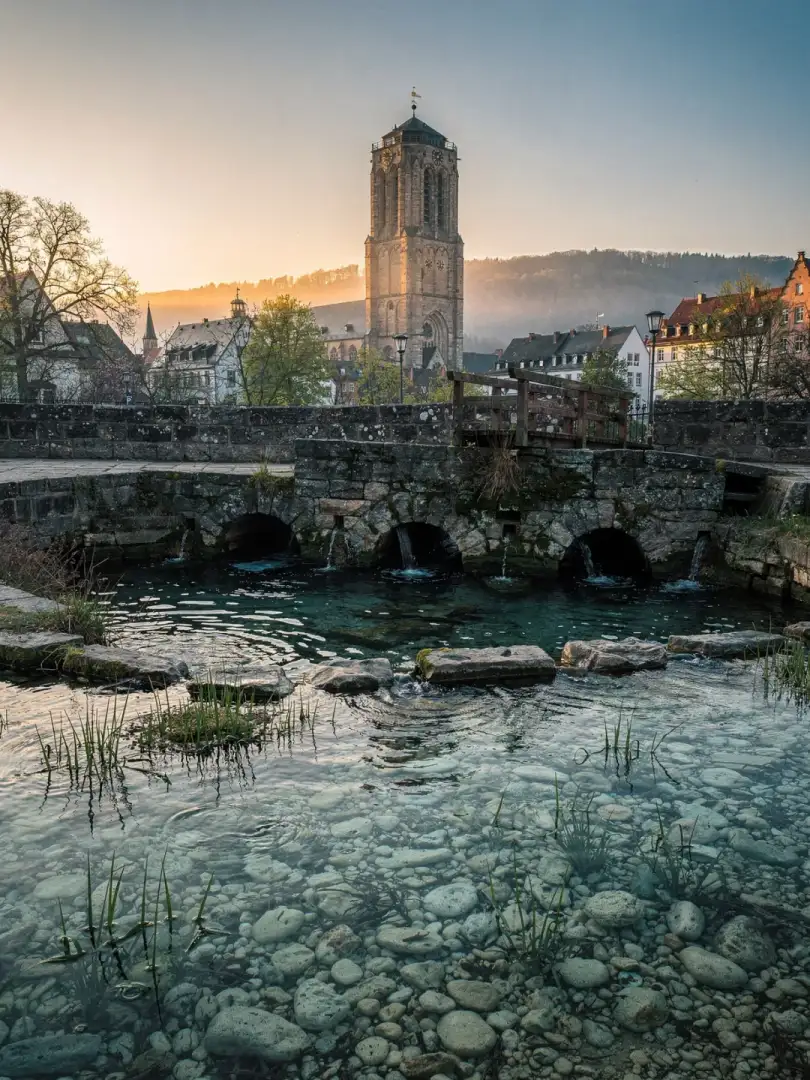
Paderborn tells a different story. There, the river Pader rises right in the middle of town, beneath the cathedral, fed by numerous springs that emerge at the edge of the limestone Paderborn plateau. The water comes up cool and clear from the ground. For a brewery, that was a locational advantage long before refrigeration existed.
Near the Teutoburg Forest and in the Weser Uplands, the hills themselves help with storage. The Herforder Brauerei was originally called "Felsenkeller," because its lagering cellars were built into the sloping hillside. Inside the rock, temperatures stay nearly constant year-round, summer and winter alike. Bottom-fermented beers, which need weeks of cold maturation, reward that stability with a clean, clear flavor.
One thing applies to nearly every brewer today: they treat their water, soften it, or add salts as needed. So the regional water shapes the history of these brewing sites more than it shapes the taste in the glass. Still, where organic brewers aim for the most unaltered ingredients possible, it remains a relevant factor.