Barley, Wheat, Rye
Malt & Grain
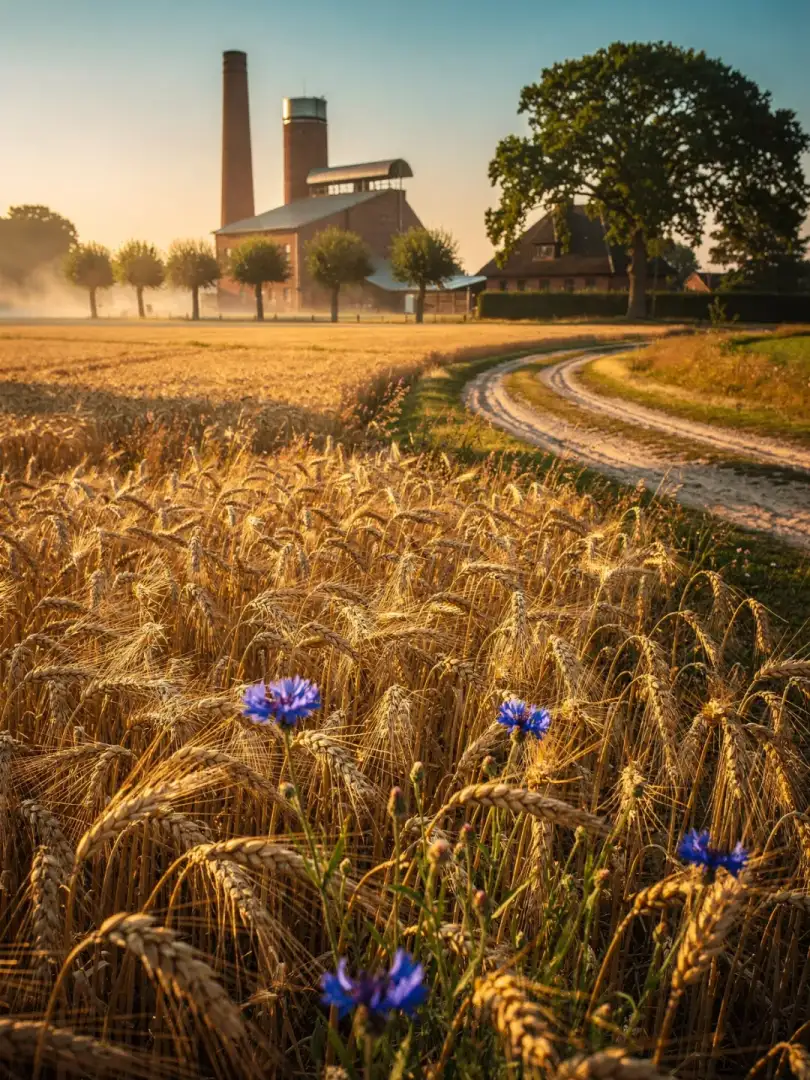
What grain goes into Münstersch Alt? Barley and wheat. Barley malt provides the base, while wheat malt softens the body and lightens the overall impression. This is possible because top-fermented beers outside Bavaria are permitted to use malts other than barley.
Malt is made by moistening grain and letting it germinate until it develops sugars and enzymes. The process is then halted in the kiln, a large drying chamber using warm air. The longer and hotter the kilning, the darker and more roasted the malt becomes. A pale Alt only needs a gentle kilning that adds barely any color.
Pinkus Müller places its own malthouse at the center of its identity, by its own account. Malting has been part of the family business since 1866, when Carl Müller established it. At Pinkus, it's the only malthouse within Münster's city limits, and the raw materials come from certified organic farming. The company considers itself a pioneer of organic brewing in Germany and states it has brewed strictly organically since the 1980s.
Rye plays more of a supporting role in the region's brewing, but takes center stage on the plate. It has grown for centuries in the sandy soils of the Münsterland, and from it comes pumpernickel, a very dark, slightly sweet bread baked for many hours at low heat. Rye thus represents the agriculture surrounding the beer rather than an ingredient in it.
Anyone drinking Pils in the Sauerland or Siegerland experiences pure barley malt. Here, it's the small addition of wheat that sets Alt apart from its copper-colored Rhineland cousin. A Hefeweizen from the same brewery uses wheat in much greater quantity, though that, too, remains more the exception in the region.