Cold-Conditioned
Yeast & Fermentation
Altbier is top-fermented, and the name explains why it's called "old": it's brewed using the old method, in which the yeast floats on top of the beer during fermentation. This yeast belongs to the species Saccharomyces cerevisiae, the same one used for wheat beer and English ale. Bottom-fermented lagers, by contrast, are considered the younger tradition.
Fermentation for Altbier usually runs cooler than for wheat beer, at around 15 to 20 degrees Celsius. This slows the fruity aromas that warm-fermented beers otherwise develop and gives the beer a cleaner taste. An Altbier shouldn't smell of banana or clove, but of malt with just a hint of fruit.
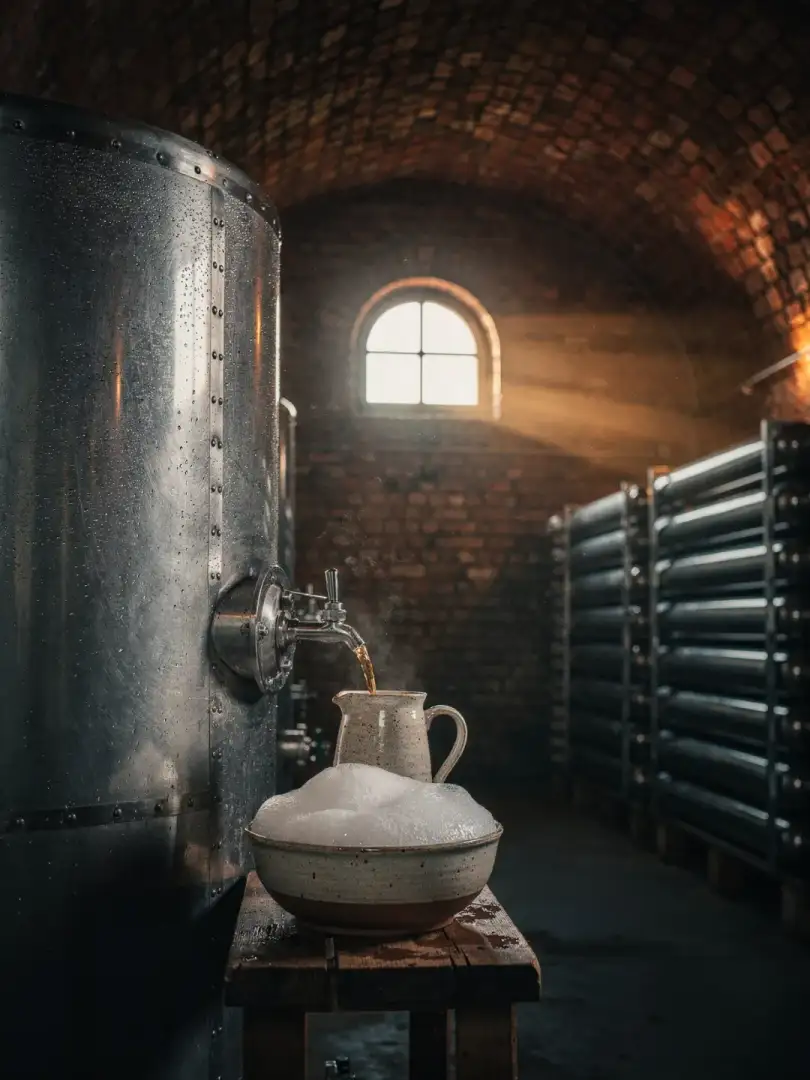
What follows is the part that makes Altbier special: cold conditioning. The young beer rests for several weeks at just a few degrees, the yeast settles out, and sulfur notes and green, unfinished flavors fade away. On the Lower Rhine today, this happens in chilled storage tanks. Open fermentation vessels and wooden casks exist there, if at all, only as the exception.
Out of this combination comes a beer that bridges the top- and bottom-fermented worlds. It tastes fuller than a Pils yet cleaner than a wheat beer. Anyone wanting to understand the difference between ale and lager will find a good example in Altbier, since fermentation and conditioning here follow separate paths.
Not every Altbier is filtered to brilliant clarity. Alongside its standard Alt, the private brewery Bolten in Korschenbroich bottles an Ur-Alt that stays unfiltered. It tastes a touch more rustic and yeasty, with a slight haze, and shows just how much yeast and conditioning contribute to character.