Bitter on Purpose
Hops
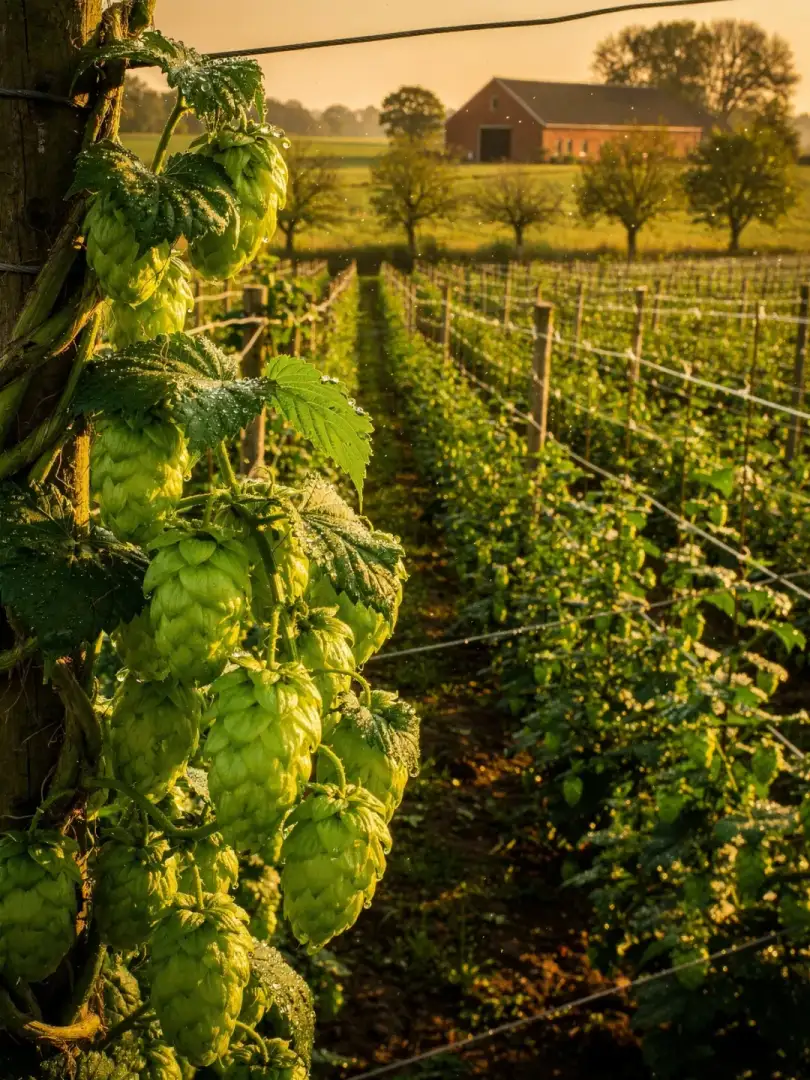
Hop gardens with their tall trellises aren't part of the Lower Rhine landscape. The hops used for Altbier come from Germany's established growing regions, chiefly the Hallertau in Bavaria. That region supplies around 83 percent of Germany's hop acreage; the country as a whole reached 18,962 hectares in 2025.
Which varieties a given brewery uses rarely appears on the label, and the breweries of the Lower Rhine don't publish their recipes. German varieties are standard for Altbier. Bittering hops like Magnum or Herkules provide the base bitterness, while aroma hops such as Hallertauer Tradition or Perle add spice and a subtle floral note.
Bitterness is measured in IBU, the scale for bitterness units. Competition style guidelines put Altbier at 25 to 50 IBU. For comparison: a Helles sits at 16 to 22, a German Pils at 22 to 40. Altbier therefore counts among the more bitter beers, even if the malt makes it feel rounder.
In practice, that means the first sip tastes malty and soft, followed by a clear bitterness that lingers for quite a while. The brewers of the Lower Rhine build on that finish. It's what sets Altbier apart from sweeter dark beers and what makes you reach for the next sip.
Aroma in Altbier comes less from the hops than from yeast and malt. Whether at Diebels in Issum or Bolten in Korschenbroich, the hops are meant not to drown out the malt but to give it a clear frame. Anyone curious about how hops shape beer can find that explained in more depth in the Fundamentals journey.