Dark-Kilned
Malt & Grain
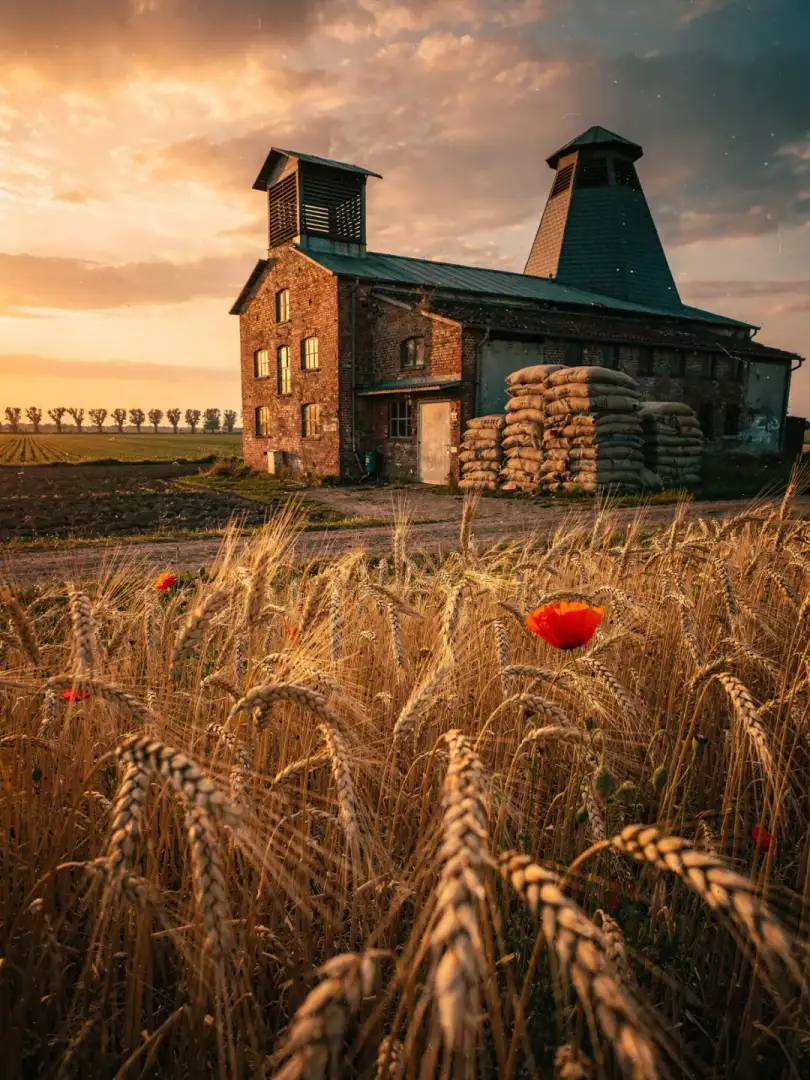
Grain, sugar beets, and potatoes grow in the fields of the Lower Rhine. Barley is part of the crop rotation, but how much regional malting barley actually ends up in the brewhouses isn't documented. What matters most, in any case, is what the maltster makes of that barley.
There, the grain is allowed to germinate so it can develop sugars, then it's dried in the kiln, an oven that blows warm air through it. The higher the kilning temperature, the darker and more roasted the malt becomes. This is exactly where it's decided whether a beer turns out pale like a Pils or copper-colored like an Altbier.
With Altbier, pale malt usually forms the backbone. Darker varieties such as Munich malt or caramel malt are added, sometimes with a small amount of roasted malt for color. Competition style guidelines put Altbier at 18 to 33 EBC. EBC is the brewer's measure of color: the higher the number, the darker the beer. A German Pils sits at 4 to 8.
Because Altbier is top-fermented, German law allows more latitude here than for bottom-fermented beers. Other malts such as wheat malt and certain types of sugar are permitted. Classic recipes get by on barley malt alone, and the Bolten brewery also brews a wheat beer it calls Ur-Weizen.
In Bolten's Ur-Alt from Korschenbroich, the malt comes through as bread crust, nut, and a touch of caramel. The beer never turns sweet, though, since the bitterness of the hops pushes back. Anyone drinking Altbier is after exactly this balance between roasted grain and a dry finish.