Three Rivers, Rock
Water & Soil
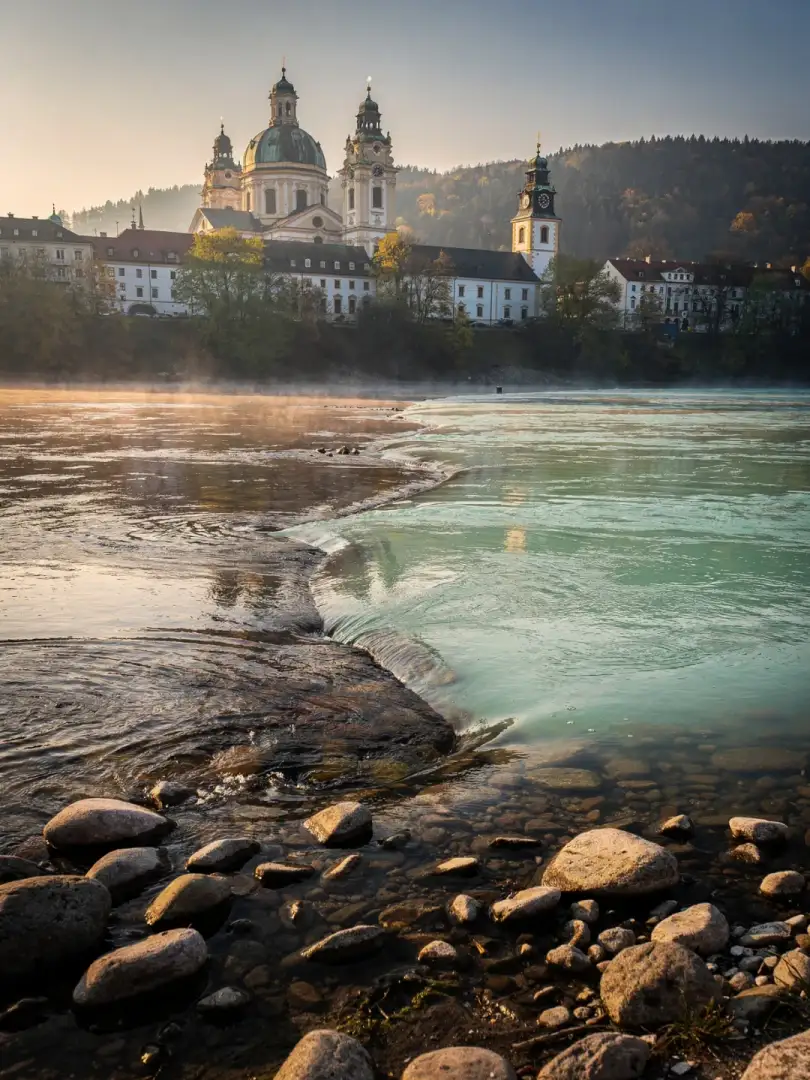
At the Three Rivers Corner in Passau, you can see the landscape's geology reflected in the water. The Danube arrives blue-brown from the west, the Inn flows greenish from the Alps, and from the north the dark Ilz flows in from the Bavarian Forest. Each river carries the color of its origin, and the three run alongside each other for a while before merging.
The Inn carries lime-rich, finely clouded glacial water. The Ilz originates in Bavarian Forest National Park, where the Kleine Ohe, Große Ohe, and Mitternacher Ohe streams join to form it. The forest sits on old, hard rock, and water from such slopes typically dissolves few minerals. I don't have measured hardness values for Passau or Zwiesel brewing water, so no figures are given here.
Brewing water rarely comes from the rivers anyway. It's sourced from wells or the municipal supply and treated in nearly all breweries—either softened or adjusted with salts. What shapes a beer today has more to do with the recipe than the source of the water.
The rock was used in a different way instead: it provides cool storage. In Zwiesel, the historic beer cellars of the Dampfbier Brewery lie deep within the stone, and the Dampfbier still matures there as it did in the past, in the rock cellar. Hacklberg likewise stored its beer in a cellar dug into Fuchsloch above the Inn in 1796.
A cellar carved into rock stays cool in summer and frost-free in winter. This is ideal for beer, since steady cold let the yeast work slowly and the beer clarify, long before any refrigeration technology existed.