Barley and Wheat
Malt & Grain
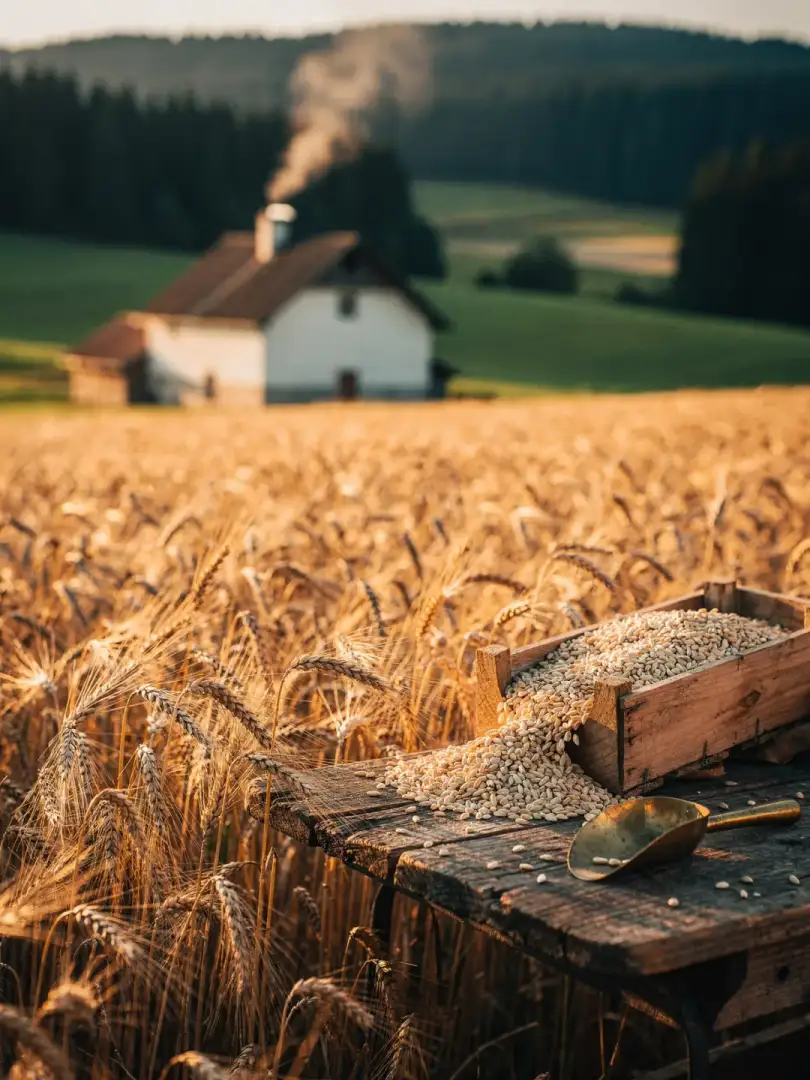
Malt is grain that has first been allowed to germinate and then dried. This happens at the maltings: the grains are soaked until the sprout emerges, then placed in the kiln, a drying oven. There, warm air halts growth, and the hotter it is, the darker the malt becomes.
According to the brewery, Zwiesel Dampfbier is made with barley malt of a light brownish color—explicitly no wheat malt. This is the source of its amber tint and its soft, slightly bready flavor. The original gravity, meaning the dissolved sugar in the wort before fermentation, is 11.5 percent for this beer, according to the brewery.
The Falter Brewery in Regen lists a pale wheat beer in its range. For this, a portion of wheat malt goes into the brew, which gives the foam stability and lends wheat beer its yeasty character. A Helles from Hacklberg or Falter, by contrast, is made from pale barley malt with its aroma of fresh bread.
How the individual Passau and Forest breweries source their malt is not uniformly disclosed. It's common for breweries of this size to source malt from Bavarian maltings and blend the varieties according to their own recipes. Based on what's documented here, neither the Hacklberg Brewery, the Falter Private Brewery, nor the Zwiesel Dampfbier Brewery operates its own malting facility.
The difference between pale and darker malt shows up directly in the glass. Pilsner malt stays nearly colorless, Munich malt brings a crust-like character and light roast notes, and the malt in Dampfbier falls somewhere in between.