Glass and Temperature
Tasting
A Regensburg Helles tastes soft, bready, and grainy, with a subtle bitterness in the background. The Dunkel is more roasted, while the Bock is fuller and denser. Good tasting examples include Kneitinger Bock, the Roggenbier from Spitalbrauerei, and Bruckmandl from Bischofshof, named after the small figure on the Stone Bridge.
Since Bischofshof no longer brews in Regensburg, the brand will come from a different source going forward. How the beers will taste then remains to be seen.
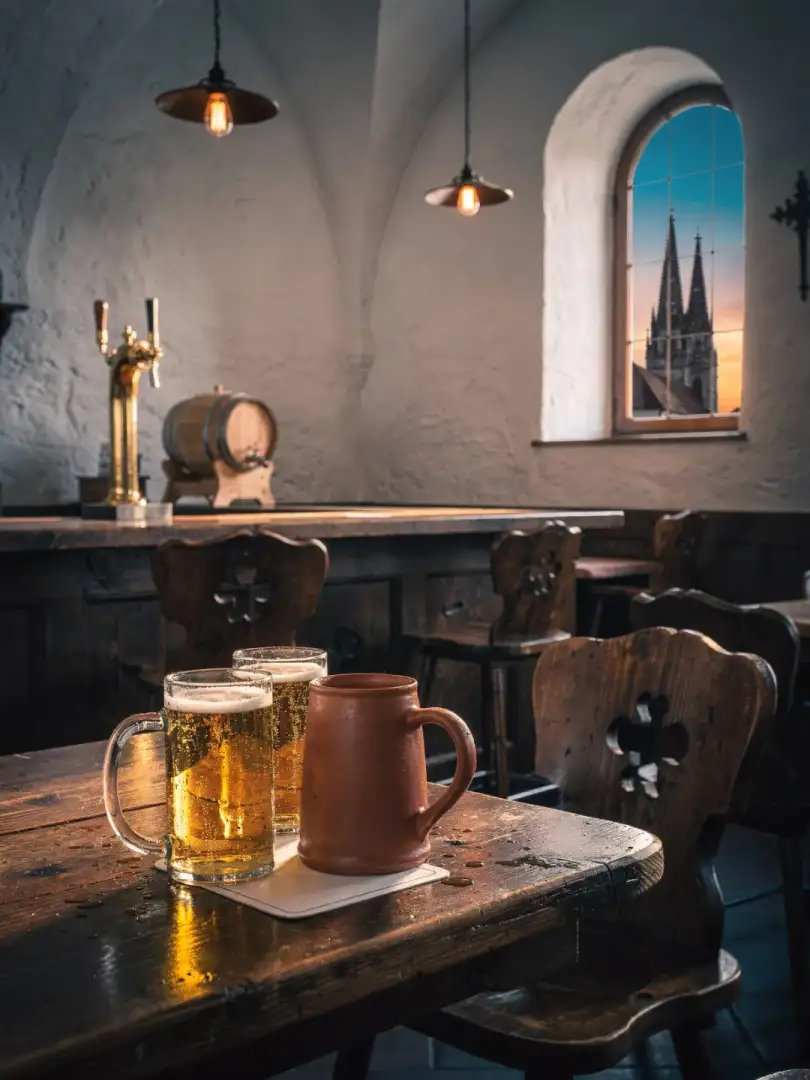
The right glass depends on the beer. Helles and Dunkel are best served in a mug or half-liter glass, typically a glass or stoneware tankard in the cellar beer gardens. A Roggenbier belongs in a tall, slender glass, giving the foam head room to form properly.
Helles is best enjoyed well-chilled at around 7 degrees Celsius, while Dunkel and Bock can be served slightly warmer, at 8 to 10 degrees, since their aromas open up more with a bit of warmth. Served too cold, the flavor stays locked in.
When pouring from the tap, the beer flows at an angle into the tilted glass, then rests briefly before the foam head is added on top. The saying about seven minutes for a proper Pils pour is just a popular expression, not a hard rule. The actual time depends on the tap system and the level of carbonation.
When tasting, a set order helps: first smell, then take a small sip, followed by a larger second one. With a Helles, the bread notes come through first, followed by a light bitterness. With a Bock, caramel and warmth join in. The same beer tastes different in the beer garden on the Galgenberg than in the vaulted cellar below, since air, temperature, and company all play a part in the experience.