Pale Barley Malt
Malt & Grain
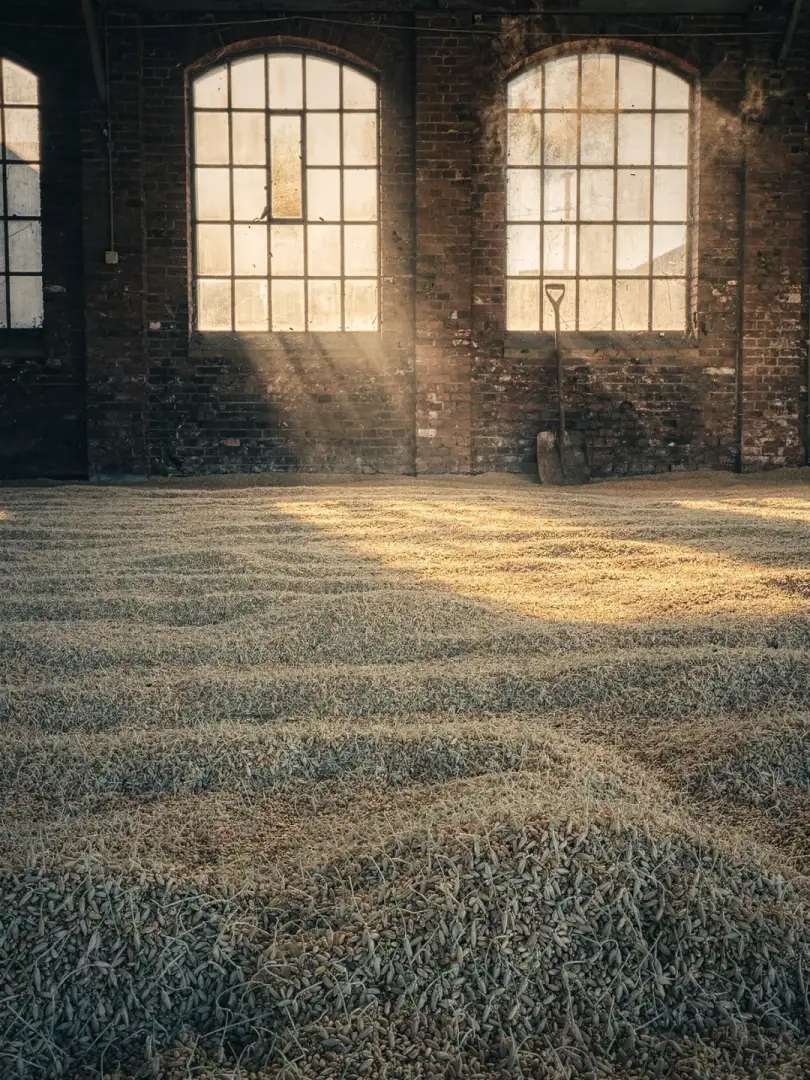
What malt is Pils brewed from? From pale-kilned Pilsner malt, meaning barley that is allowed to germinate and is then dried at a low temperature. This drying process is called kilning and takes place at the malthouse. Because the barley barely takes on any color in the process, the beer stays straw-yellow to golden-yellow.
The journey from grain to malt has three steps. First the barley is steeped in water, then it germinates for several days, and finally kilning stops the growth. During this time, enzymes form in the grain that later, at the brewery, convert the starch into fermentable sugar.
Barley for brewing barely grows in the Ruhr Region itself, the area is densely built up. The breweries buy their malt in from malthouses and rarely state where it comes from. König describes its malt, according to the brewery, as an extract-rich barley malt. Extract-rich means that the grain contains a lot of soluble matter, which later becomes sugar and alcohol.
German law allows only barley malt for bottom-fermented beer. Wheat, rye or smoked malt play no everyday role in the Ruhr Region, the region's beer is a pure barley beer. A Pils under the German standard falls between 4 and 8 EBC, the unit for beer color, placing it at the pale end of the scale.
The malt provides the body and the finish. You can taste it in the Stauder Premium Pils from Altenessen just as in the Pils from Moritz Fiege. A good Pils tastes of bread crust and a touch of honey, but never sweet. The sweetness of the malt is balanced against the bitterness of the hops, and when you drink the beer, it's mainly that balance you taste.