Cold and Warm
Yeast & Fermentation
Why does a pilsner taste different from a wheat beer, even though both are made from barley, hops and water? The answer is yeast. Pilsner is bottom-fermented, using a yeast that works at low temperatures and eventually settles to the bottom. Wheat beer is top-fermented, needs warmth, and collects at the top of the fermentation vessel.
The bottom-fermenting yeast is called Saccharomyces pastorianus, a hybrid of two different species. In 1883, the Dane Emil Christian Hansen isolated the first pure culture of it in the Carlsberg laboratory. Since then, no brewery has had to rely on chance, and the flavor stays consistent year after year.
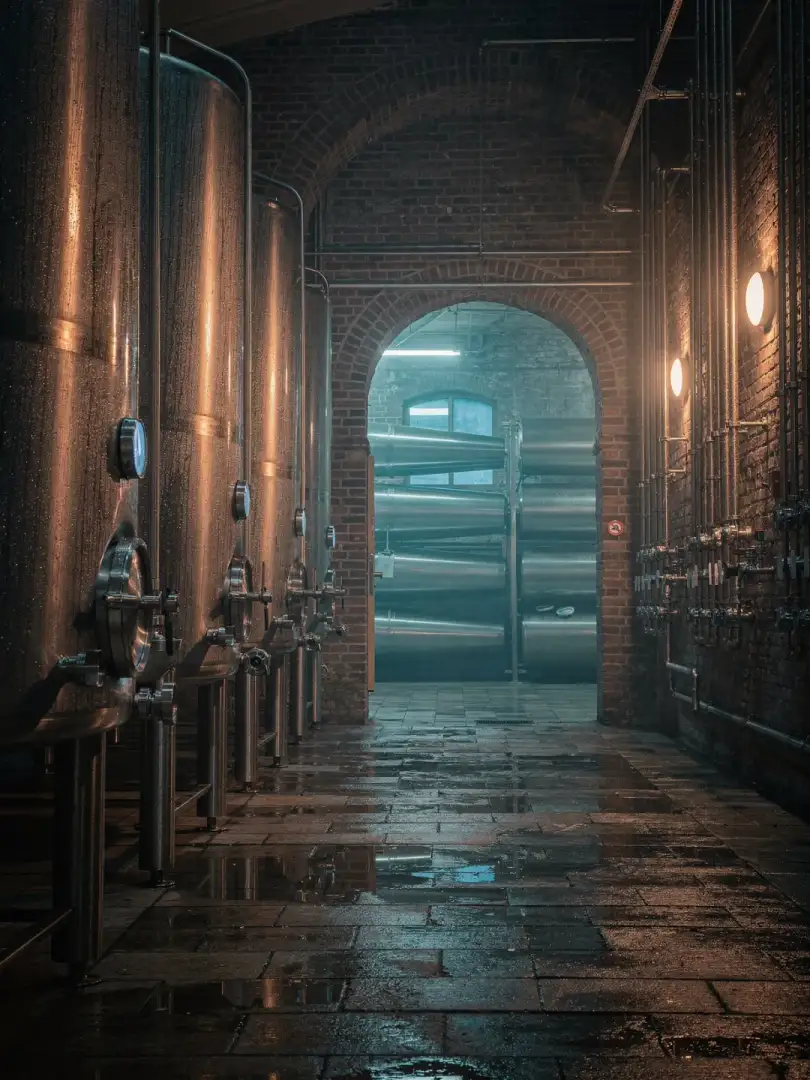
With pilsner, primary fermentation usually takes place at around eight to twelve degrees Celsius and lasts several days. Afterward, the beer matures for weeks in a lagering tank at temperatures near freezing. There, the yeast settles out, and the beer — whether from Karlsberg or Pirmasens — turns clear and smooth. This maturation process is called lagering, and it's where the term ‘lager' comes from.
With wheat beer, fermentation runs warmer, often around 20 degrees Celsius. In the process, the yeast produces aromas reminiscent of banana and clove. Bischoff states that its beers use a yeast strain related to those from Weihenstephan — a claim from the producer that can't be independently verified.
Flavor differences between yeast strains are hard to detect in a pilsner, but far more obvious in a wheat beer. If you want to understand what yeast actually does, try a pilsner and a hefeweizen from the region side by side. You'll immediately taste what sets top- and bottom-fermented beer apart.