Bought-In Cones
Hops
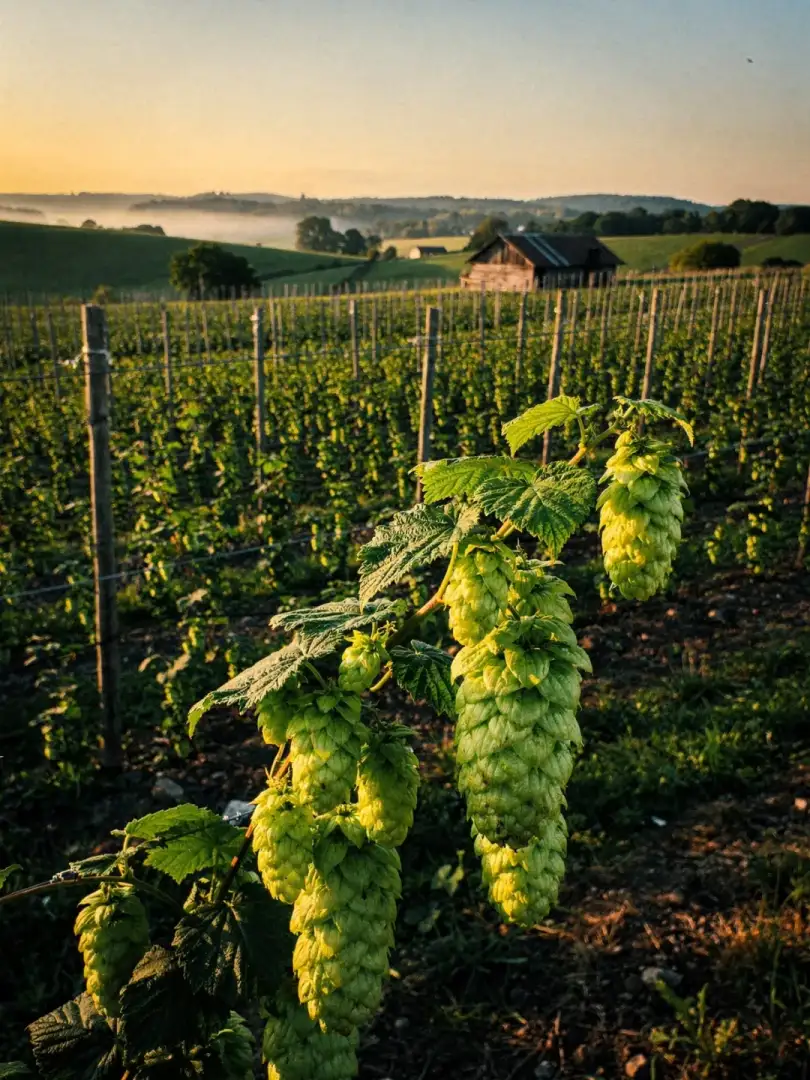
Does hops grow in the Saarland and Palatinate? Not in any meaningful amount in this region. According to the 2025 BarthHaas report, Germany cultivated 18,962 hectares of hops, but nearly all of it is in Bavaria, Baden-Württemberg and Saxony-Thuringia. Breweries in Homburg, Pirmasens and Winnweiler buy their hops in from elsewhere.
The best-known growing regions are the Hallertau and Tettnang, both of which hold EU protected status. The Hallertau produces varieties like Perle, Tradition and Magnum, while Tettnang gives its name to the Tettnanger hop. Which variety any given brewery uses is something most don't disclose.
What does hops actually do in a pilsner? It supplies the bitterness that balances the sweet malt character, along with the aroma, which can smell of herbs, flowers or grass. Bittering hops go into the kettle early and boil for a long time. Aroma hops are added late, so they lose less of their fragrance.
Bitterness is measured in IBU, a unit for the amount of bittering compounds present. According to style guidelines, a German pilsner sits between 22 and 40 IBU, while a hefeweizen comes in noticeably lower at 8 to 15 IBU. That's why the region's wheat beer tastes soft and fruity, while its pilsner comes across as sharper and more bitter.
The private Bischoff brewery mentions regional hops on its website. Whether that means the hops actually come from the Palatinate itself can't be confirmed from available sources, and the text leaves it open. What's clear is only that hops don't define the landscape here the way they do in the Hallertau.