Pale Pilsner Malt
Malt & Grain
A Pilsner lives on the palest malt there is. It's called Pilsner malt for a reason, and according to BJCP style guidelines, the color of a German Pils sits at just 4 to 8 EBC — a pale straw to gold hue.
Malt is produced when barley begins to germinate in water. This germination develops enzymes that later, in the brewhouse, convert starch into sugar. The legal definition puts it plainly: malt is grain that has been artificially induced to germinate.
Next comes kilning. The germinated barley is dried at low temperatures in the malthouse so it stays pale and develops minimal roasted character. The hotter the process, the darker and more caramel-like the malt becomes — and dark roasted notes have no place in a Pilsner.
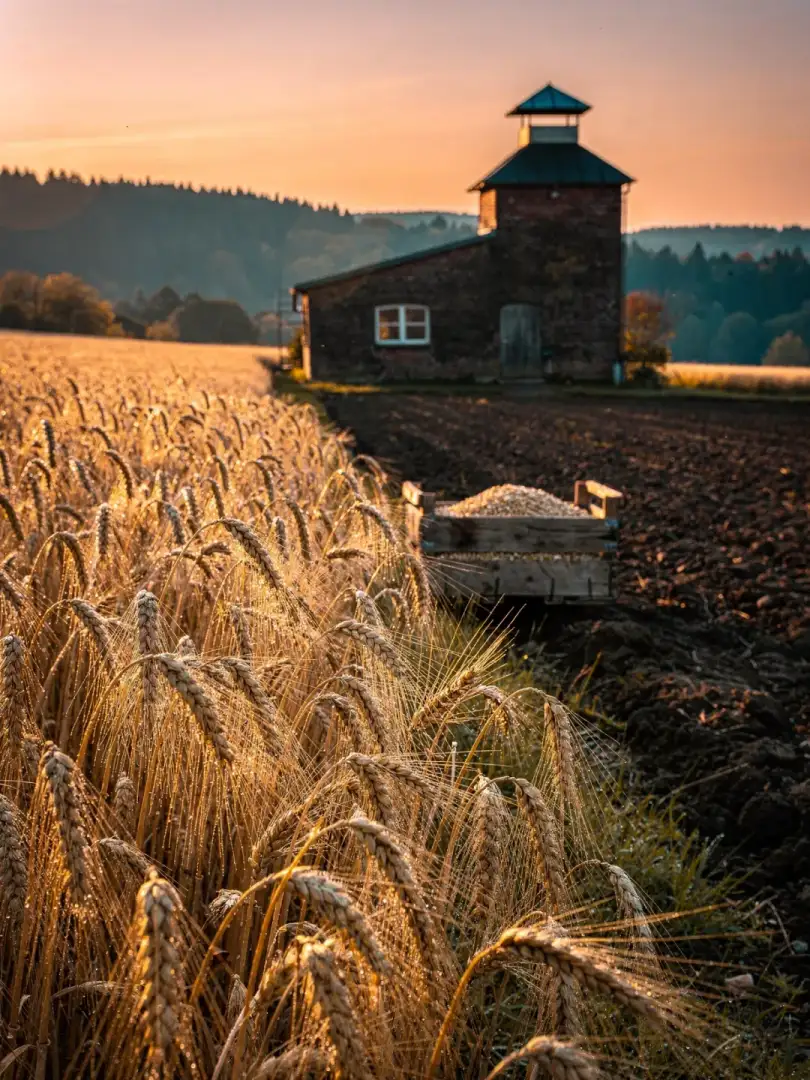
The big breweries generally don't disclose exactly where the barley for a particular beer is grown. In this low mountain range, forest and grassland dominate, and large barley fields are the exception rather than the rule. How much malt each brewery produces itself versus buys in isn't documented for every house. Malthouses supply pale barley malts for both Pilsner and Helles, and the two styles differ only in nuance even at the malt-bed level.
This same rule applies in Sauerland and Siegerland to Warsteiner, Veltins, and Krombacher: malt is the quiet component of Pilsner, rarely tasted consciously. What matters is what ultimately ends up in the glass — a smooth, lightly bready malt base that carries the bitterness without tasting sweet. Because the malt stays pale and understated, everything else in a Pilsner steps forward: hops, yeast, and clean work in the brewhouse.