Cold and slow
Yeast & Fermentation
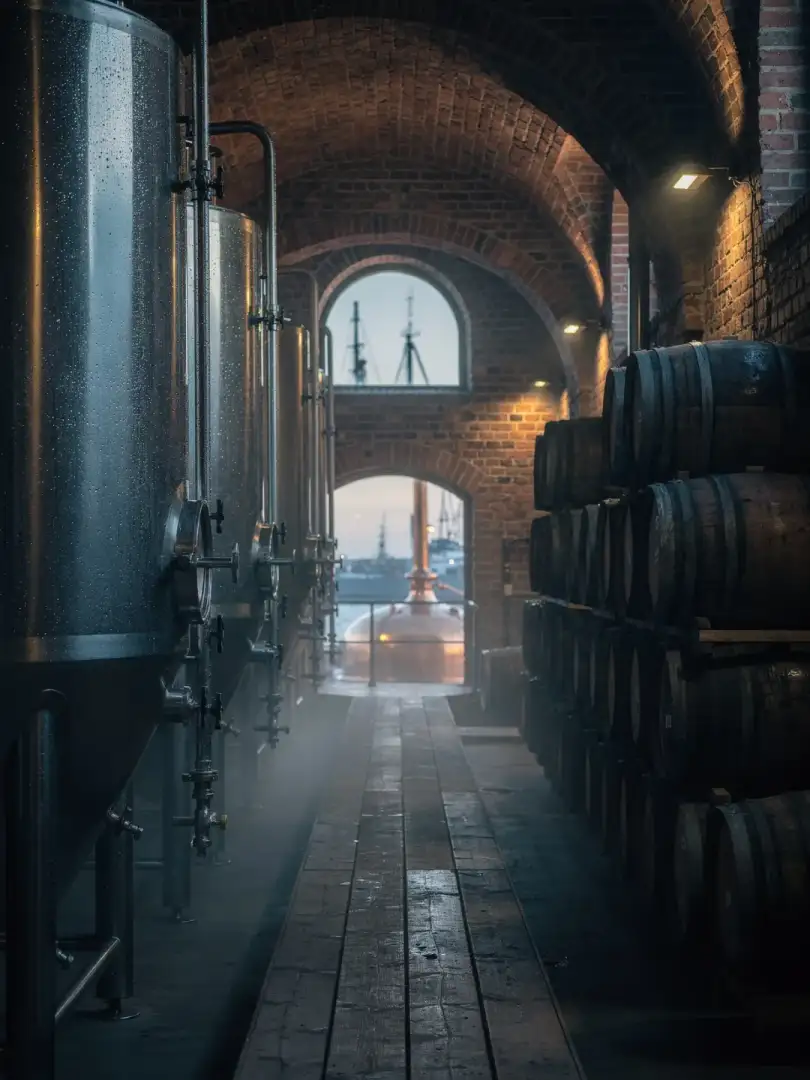
Pilsener from the fjord is bottom-fermented. Bottom-fermented means the yeast sinks to the bottom after fermentation and works at cool temperatures, usually below 10°C. The beer ferments slowly, stays clean in flavor, and then matures for weeks in a lagering tank—hence the name lager.
The yeast itself is a hybrid. Lager beer is fermented with Saccharomyces pastorianus, a cross between ale yeast and a wild relative first described in Patagonia in 2011. That is where the parent strain was first found, though it has since been identified in other parts of the world as well.
The old Lübeck Rotbier was likely still top-fermented, like most beer before the 19th century. Top- and bottom-fermentation differ in temperature and in the fruitiness the yeast produces: ale yeasts create fruitier aromas, while lager yeasts remain more restrained.
In Flensburg and Marne, the beer is bottled after maturation and sealed, as the region has long done, with a swing-top closure. The Dithmarscher Brauerei reintroduced it in 1983, according to its own account, while Flensburger Brauerei claims it never abandoned the closure at all.
Opening a bottle produces that distinctive "plop." The brewery itself claims this became the trademark sound of Flensburger Pilsener, and anyone holding a swing-top bottle believes it instantly. The sound has nothing to do with fermentation, but everything to do with the carbonation that keeps the beer fresh inside the sealed bottle.