From the south
Hops
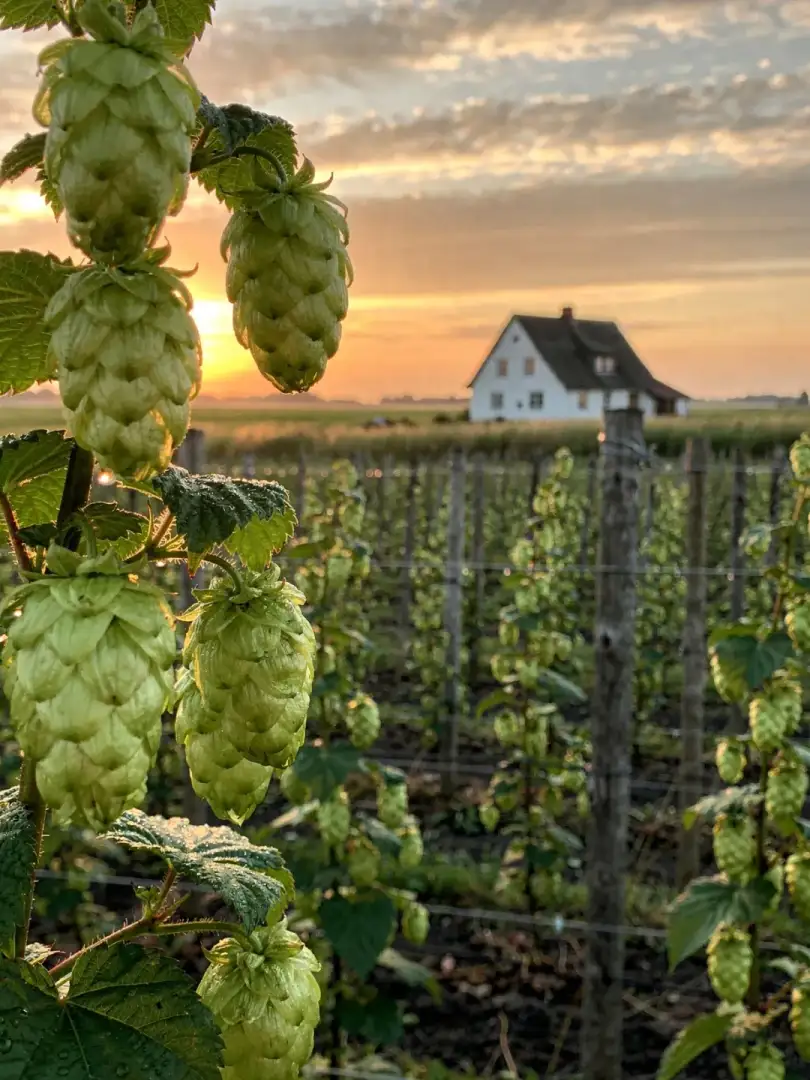
Hardly any hops grow in Schleswig-Holstein. The coastal climate and the sandy, marshy soil offer the plants far less than the hop gardens concentrated mainly in Germany's Hallertau region in Bavaria, the Tettnang area, and the Elbe-Saale region. The brewers in Flensburg, Marne, and Kiel therefore buy in their hops.
In 2025, Germany had a total of 18,962 hectares under hop cultivation, accounting for around 43 percent of the world's alpha acid production. Alpha acid is the substance in the hop cone that gives beer its bitterness. Anyone wanting to get to know hops should look to the Hallertau rather than the fjord.
That a typically North German Pils emerges despite this is down to the recipe. Brewers typically build the beer on bittering hops and add a touch of aroma hops at the end, lending floral or spicy notes. The result is a clean, dry bitterness. Exactly which varieties shape Flensburger Pilsener or Dithmarscher Pilsener is not documented here, so we name none.
Bitterness is measured in International Bitterness Units, or IBU. According to the BJCP style guidelines, a German Pils falls between 22 and 40 IBU, while a Helles sits well below that. North German Pils is considered more bitter than its Bavarian counterpart, since it is traditionally hopped a bit more generously.
For craft brewers like Lillebräu in Kiel, hops have long been a global import. They turn to varieties from the US or New Zealand when brewing an ale with citrus or fruity notes, leaving the classic Pils to the big breweries.